A hidden leak in Western Sydney rarely announces itself. The first sign is usually a Sydney Water bill that has jumped, a warm patch on a tiled floor, a damp line on a wall in a Harris Park unit, or a water meter that keeps ticking over when every tap in the house is off. Behind those signs are the usual local suspects: copper pipe from the 1960s to 80s eaten through by pinhole corrosion, pipework buried under concrete slabs, high mains pressure in the low suburbs near Prospect Reservoir, and shower recesses and flexi hoses in the unit blocks of Parramatta, Westmead and Bankstown. This page explains how to confirm a leak from the meter, how a leak is located without tearing the house apart, and what happens once it is found.
Start at the Sydney Water meter
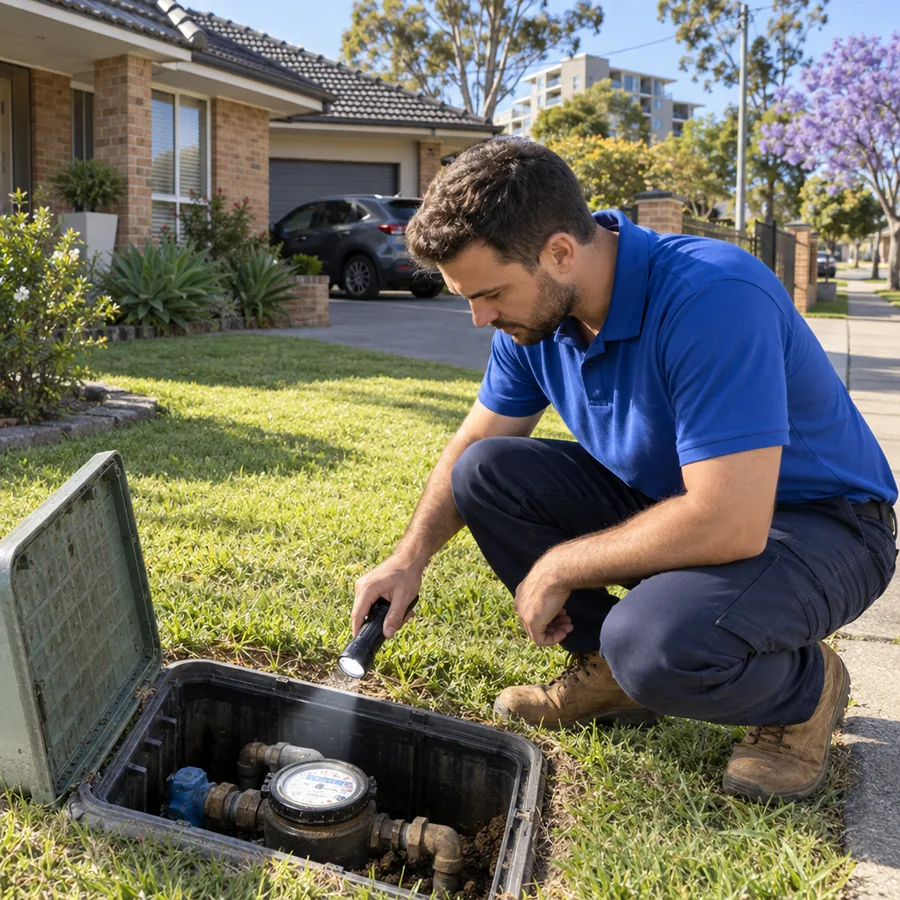
Every property connected to the mains has a Sydney Water meter, usually at the front boundary near the driveway. Turn off every tap, the washing machine, the dishwasher and any irrigation, and make sure no toilet is running. Read the meter, including the small digits or dial that count litres, and read it again after an hour without using water. If the numbers have moved, water is leaving the pipes somewhere between the meter and the fixtures, and that side of the meter belongs to you, not Sydney Water. If the meter is still but the ground around it is wet, or water is bubbling in the street, that is Sydney Water’s side and is reported to them. A plumber does the same test on arrival, with the house isolated in sections to narrow down which line is losing water.
Pinhole corrosion in copper: the Western Sydney classic
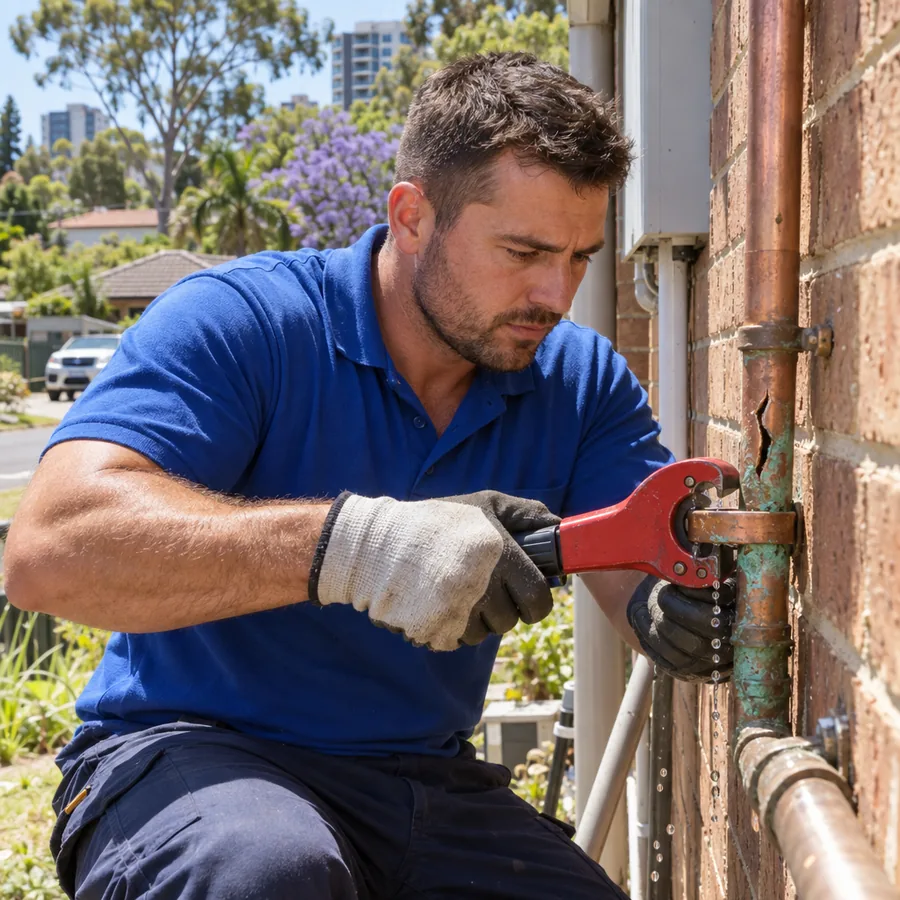
Sydney’s water is known for pinhole corrosion in copper pipe, and the homes built from the 1960s to the 80s across Blacktown, Seven Hills, Toongabbie, Merrylands, Revesby, Cambridge Park and Campbelltown have exactly the copper it affects. A pinhole sprays a fine mist rather than a stream and can run for months inside a wall cavity or under a slab before anything shows. The first pinhole is seldom the last, because the same water is running through the same pipe. Locating and repairing the leaking section is the immediate job; if the repair shows the pipe wall is thin along its length, replacing that run in new copper or PEX is quoted separately so you can decide, rather than chasing pinholes one at a time.
Slab leaks and leaks inside walls
Brick veneer homes on concrete slabs from the 1970s onward, standard in Quakers Hill, Glenmore Park, Casula and the Macarthur estates, run hot and cold copper under or through the slab. A warm spot on the tiles, a floor that is always damp along one wall, or a hot water unit that fires when nothing is on usually means a hot line under the slab. In the older double-brick and fibro homes of Guildford, Yagoona and St Marys the water lines run through wall cavities and the subfloor, and a leak shows as bubbling paint, swollen skirting or a smell in a cupboard. Both are found from above before anything is cut, so the repair opening is one tile or one section of plaster rather than a trench across the room.
How the leak is located
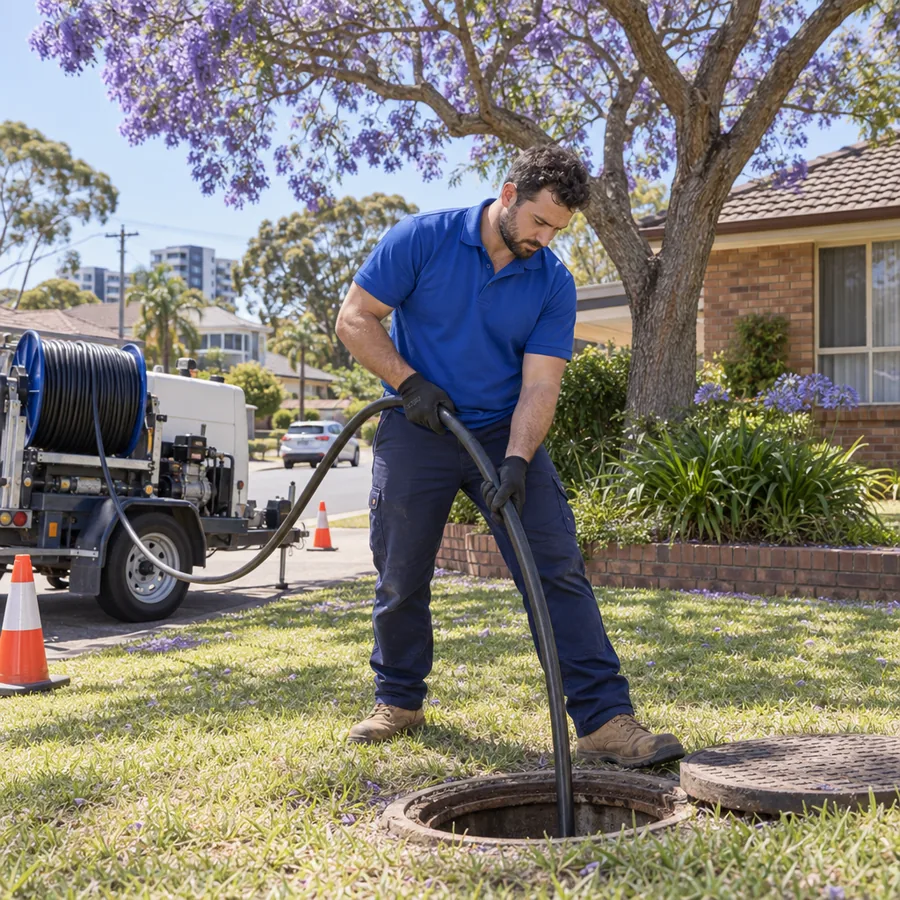
Acoustic listening equipment picks up the sound of water escaping under pressure through a slab, a wall or the ground, and the sound narrows the location to a small area. A thermal camera shows a hot water leak under tiles as a warm plume, and shows wet plaster or a damp subfloor as a cold patch. Where a line is buried and silent, it is pressure tested with water or an inert tracer gas to confirm which section is losing pressure, and the leak point is found from where the gas surfaces. On a sewer or stormwater leak, a CCTV camera goes down the drain instead. The aim is one small opening at the leak, quoted before the concrete saw or the plaster knife comes out.
High mains pressure near Prospect and pressure limiting valves
Western Sydney is fed largely through Prospect Reservoir, and the low-lying suburbs close to it, Wetherill Park, Smithfield, Fairfield and Guildford, plus streets along the Parramatta River, can receive mains pressure well above what household pipework, flexi hoses and hot water relief valves are designed for. High pressure turns a weak joint into a leak and wears out washers and hoses. A pressure limiting valve fitted after the meter brings the whole property down to a sensible working pressure; it is standard on the new estates in Schofields and Oran Park and often missing on the older homes that need it most. Static pressure is measured at an outside tap on any leak visit, and a limiting valve is quoted if the number is high.
Shower, balcony and flexi hose leaks in unit blocks
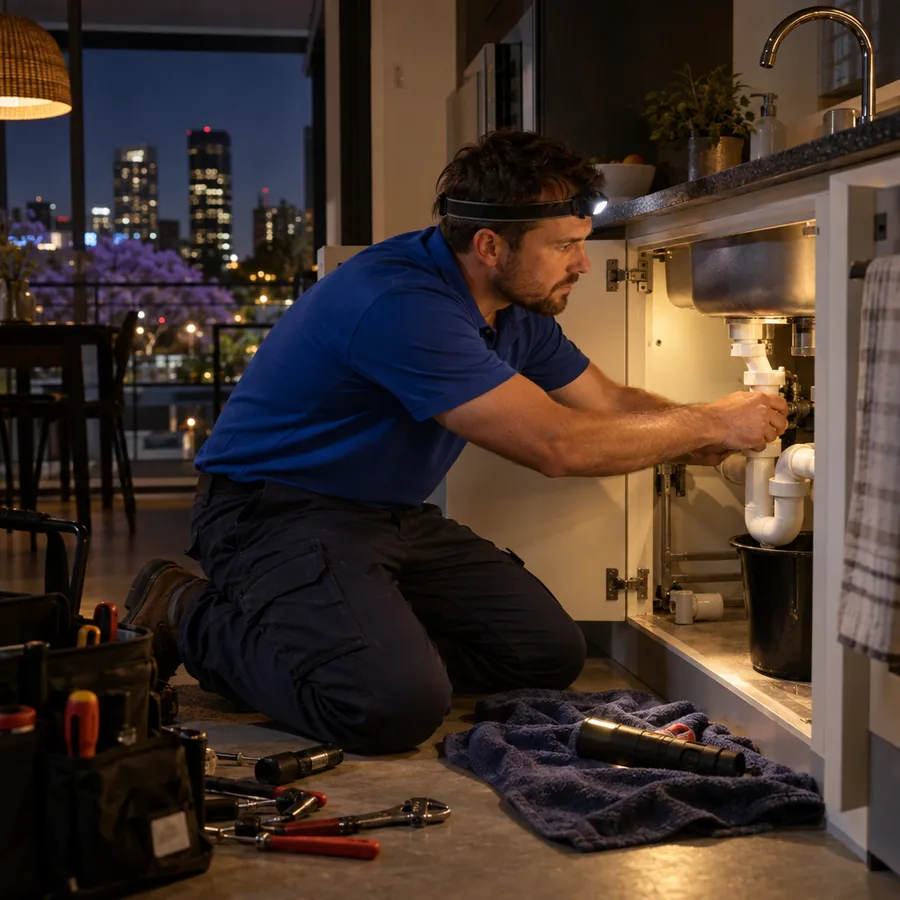
In the 1960s and 70s three-storey walk-ups of Harris Park, Westmead, Granville, Auburn and Bankstown, and the newer towers around Parramatta Square and Westmead, the leak is usually in one of three places. Shower recesses where the waterproofing membrane or the grout has failed, sending water into the unit below rather than down the drain. Balconies with a failed membrane or a blocked balcony drain that backs up into the living room in a summer storm. And braided flexi hoses under vanities, sinks and toilets, which are behind a large share of apartment floods in Parramatta, Westmead, Wentworthville and Liverpool. The first job in a unit is establishing whether the leak is from your fixtures, from the unit above, or from a common pipe in the wall, because that decides whether it is your repair or a strata one. The plumber puts that finding in writing for the strata manager.
Low water pressure in Parramatta: leak or supply?
Complaints about low water pressure in Parramatta, North Parramatta and the hilltop streets of Winston Hills and Cranebrook have two common causes. One is a leak or a partly blocked galvanised line on the property side of the meter, common in the Federation homes around Parramatta Park and Harris Park where the original galvanised service has corroded inside. The other is the supply itself, where a hilltop street sits at the edge of a pressure zone. A pressure test at the meter and at the taps separates the two: the first is a plumber’s repair, the second is a conversation with Sydney Water.
After the leak is found
Once the leak is located it is repaired on the spot where possible, with the pipe section replaced rather than patched, and the meter is tested again before the plumber leaves. If the leak has been running for weeks, ask Sydney Water about a leak allowance on the bill; they have a process for concealed leaks repaired by a licensed plumber, and whether an allowance is granted is their decision. For a pipe that has let go rather than seeped, see burst pipe repair; for water surfacing in the yard over a drain, blocked drains covers sewer and stormwater faults.
What is included
- Meter test with the house isolated in sections to confirm a leak and narrow it to the hot line, cold line, inside or outside
- Acoustic and thermal imaging leak location through slabs, tiles, walls and garden beds before anything is opened up
- Pressure testing of water lines with water or tracer gas to find silent leaks in buried and under-slab pipework
- Repair of pinhole copper leaks, failed joints and corroded galvanised services, with the section replaced rather than patched
- Static pressure measurement and fitting of a pressure limiting valve where mains pressure is high
- Shower recess, balcony and flexi hose leak diagnosis in units, with a written finding for the strata manager
- Repair invoice and report you can use to ask Sydney Water about a leak allowance
Signs you should call now
- The water meter keeps moving when every tap, appliance and toilet in the house is off
- A Sydney Water bill that has jumped with no change in how the household uses water
- A warm patch on a tiled or concrete floor, or the hot water unit running when nothing is on
- Damp, bubbling paint, swollen skirting or mould on a wall or inside a cupboard
- The sound of running water inside a wall or under the floor at night
- A soft, sunken or always-green patch of lawn, or water surfacing on the driveway
- Water stains on the ceiling of the unit below your bathroom or balcony
If water is running where it should not, shut the meter
The isolation valve is at the Sydney Water meter, usually at the front boundary near the driveway. Turn it clockwise until it stops. If water has reached power points, light fittings or the switchboard, turn the power off at the main switch before you walk through it. Lift what you can off wet floors and keep photos of the damage for insurance.
Frequently asked questions
How do I know if I have a hidden leak?
Use the Sydney Water meter. Turn off every tap, the washing machine, the dishwasher and any irrigation, and check that no toilet is running. Read the meter, including the small digits or dial that count litres, wait an hour without using water, and read it again. If it has moved, water is leaving the pipes somewhere on your side of the meter. A rising bill, a warm patch on the floor, damp on a wall or the sound of water at night all point the same way. A plumber repeats the test with the house isolated in sections to narrow it down.
Why do copper pipes in Sydney get pinhole leaks?
Sydney's water chemistry is known for causing pitting corrosion on the inside of copper pipe, and the copper installed in homes from the 1960s to the 80s across Blacktown, Seven Hills, Merrylands, Revesby and Campbelltown is now at the age where pinholes appear. A pinhole sprays a fine mist rather than a stream, so it can run inside a wall or under a slab for months. The first pinhole is seldom the last on the same run. Repairing the leaking section is the immediate job; if the pipe wall is thin along its length, replacing that run is quoted separately.
Is a leak at the water meter mine or Sydney Water's?
Sydney Water owns the water main, the service line to the meter and the meter itself. If water is pooling around the meter, bubbling up in the street or the nature strip is wet with the house isolated, that is Sydney Water's to fix and is reported to them. Everything after the meter outlet, the line to the house, the internal pipework and every fixture, belongs to the property owner and is repaired by a licensed plumber. A plumber who finds the leak is on Sydney Water's side tells you so rather than quoting for it.
Will you have to dig up the slab or rip out walls?
Not without knowing where the leak is first. Acoustic listening equipment, thermal imaging and pressure or tracer gas testing locate a leak under a slab or inside a wall to a small area before any tile or plaster is touched, so the opening is usually a single tile or a section of plaster at the leak point. If a slab leak is on a long, badly corroded run, it is sometimes better to reroute that line through the ceiling or a wall than to cut the slab, and both options are quoted so you can decide.
Will Sydney Water reduce my bill after a leak is fixed?
Possibly. Sydney Water has a process for customers who have had a concealed leak repaired by a licensed plumber, and it is worth asking them about a leak allowance once the repair is done. They usually want the plumber's invoice showing what was repaired and when, and the meter readings before and after. Whether an allowance is granted, and how much, is Sydney Water's decision under their own rules, so treat it as something to ask for rather than something to count on. The plumber's report is written so you have what they ask for.
My shower is leaking into the unit below. Who pays for it?
It depends on where the water is coming from. In most NSW strata schemes the waterproofing membrane under the shower and the pipes in the common walls are common property and are the owners corporation's responsibility, while the tap, the mixer, the flexi hoses and fixtures inside your unit are yours. The plumber's first job is to establish which one is leaking, using a water test on the recess and a check of the pipework, and to put the finding in writing so the strata manager can act on it. The 1960s and 70s blocks of Harris Park and Westmead are frequent callers.
Why is my water pressure so high, and does it cause leaks?
Much of Western Sydney is fed through Prospect Reservoir, and low-lying suburbs close to it, such as Wetherill Park, Smithfield, Fairfield and Guildford, and streets along the Parramatta River can receive mains pressure well above what household pipework, flexi hoses and hot water relief valves are designed to take. High pressure turns a weak joint into a leak and wears out tap washers and hoses quickly. A pressure limiting valve fitted after the meter brings the property down to a sensible working pressure. The plumber measures static pressure at an outside tap on any leak visit and quotes a valve if the number is high.