Hot water in Parramatta and Western Sydney runs on a mix of systems that reflects how the region was built: electric storage tanks in the laundries and side passages of 1950s to 80s homes, gas storage and continuous flow units wherever the Jemena reticulated network reaches, solar on the 2000s roofs of Glenwood and Glenmore Park, and heat pumps going in fast on the back of NSW energy-saving rebates. Each fails in its own way, and the region’s heat shortens the life of anything mounted outdoors.
Electric storage tanks in 1950s to 80s homes
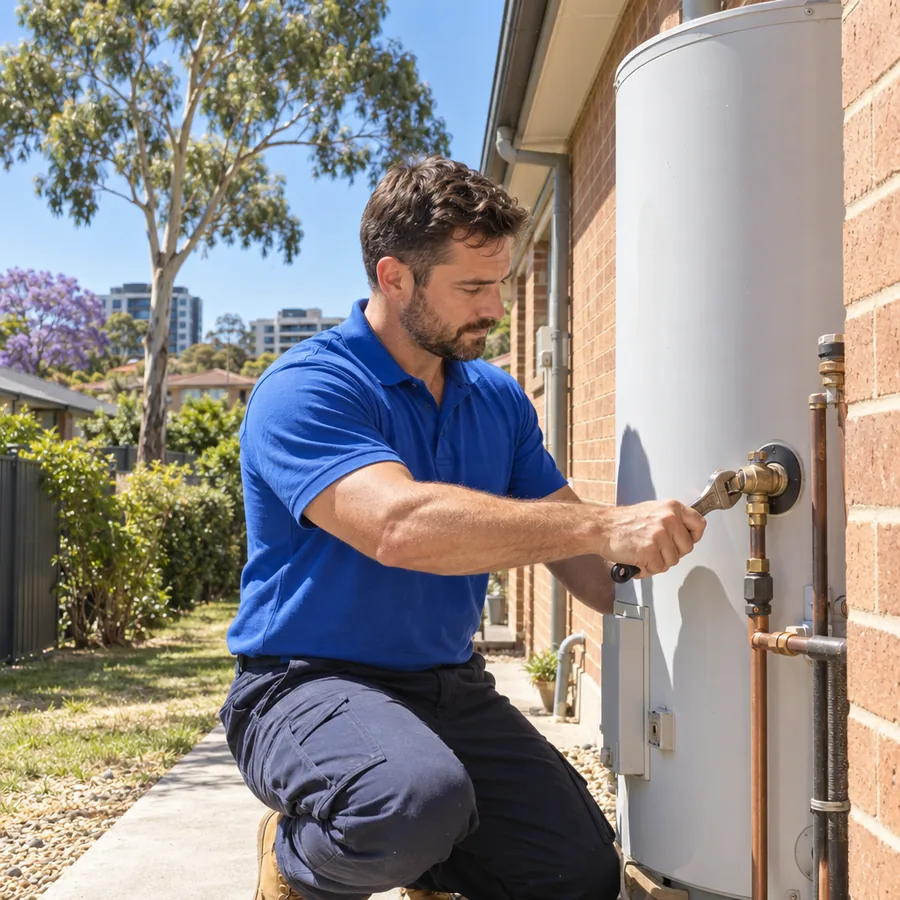
The fibro and brick homes of Guildford, Merrylands, Toongabbie, Wentworthville, Seven Hills and Kingswood and the estates of Blacktown and Mount Druitt were built with an electric storage tank, usually outside on the side passage or in the laundry. The faults are predictable: a heating element burns out, a thermostat fails so the water is either scalding or cold, the relief valve starts to run, or the tank itself rusts through once the sacrificial anode inside it is spent. Elements, thermostats and valves are repaired on the spot; a tank leaking from the seam or the base is finished, and you are shown the rust. The guide to hot water not working covers the breaker, off-peak tariff and isolation switch checks worth doing before you call.
Gas storage and continuous flow on the Jemena network
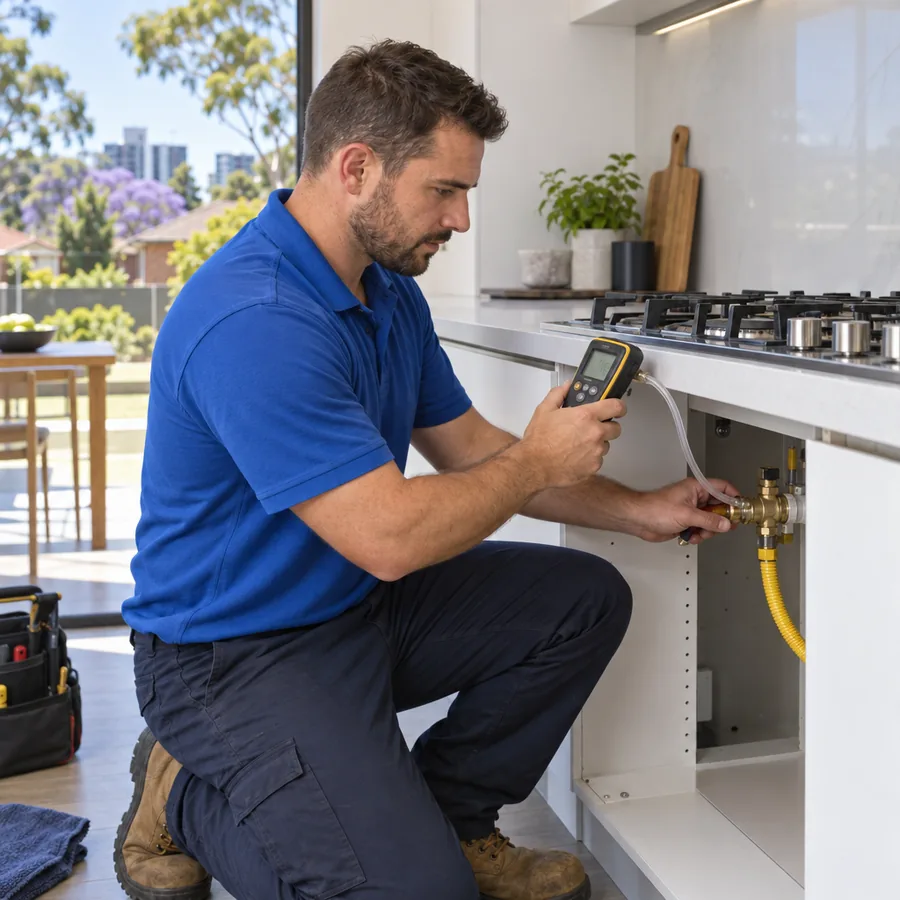
Jemena’s reticulated gas network runs through most of Parramatta, Cumberland, Blacktown, the Hills, Liverpool and Bankstown. Gas storage tanks fail through thermocouples, pilot assemblies and burners, and eventually through the tank in the same way as electric. Continuous flow units mounted on an outside wall fail through ignition, flow sensors and scaled heat exchangers. All gas work must be done by a gasfitter licensed with NSW Fair Trading, and every repair or replacement is finished with a certificate of compliance. A gas smell at the unit is a job for the gas plumber; a smell at the meter or in the street is reported to the Jemena gas leaks line first. NSW has not restricted new gas connections, so a like-for-like gas replacement remains a straightforward option.
Heat pumps, NSW rebates and solar
Heat pump hot water has become the default replacement for an electric storage tank across Western Sydney, because it uses a fraction of the electricity and the region’s warm climate suits it. The NSW Government’s energy-saving schemes offer a rebate on eligible heat pump installations when an old electric or gas storage unit is replaced. The amount changes and depends on the unit and the property, so it is not quoted here; whether your home qualifies and what the current rebate is are explained on the quote. Heat pumps need airflow and make some noise, so where the unit goes is part of the conversation.
Solar hot water on the 2000s roofs of Glenwood, Glenmore Park and Harrington Park is serviced through its collectors, booster element or gas booster, controller and valves. A solar system that only produces hot water when the booster runs usually has a failed pump, sensor or valve rather than a failed collector.
Tempering valves, relief valves and high mains pressure
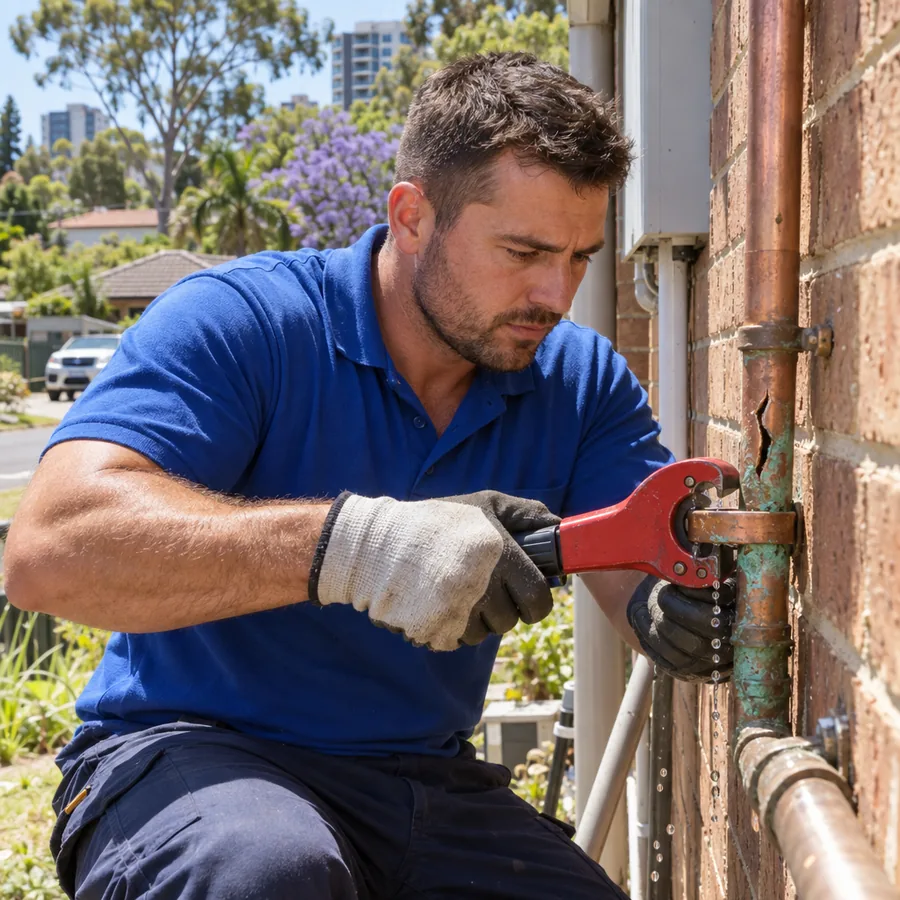
Two valves keep hot water safe. The tempering valve mixes cold into the hot supply so bathroom taps run at a temperature that will not scald a child or an elderly person, while the tank stays hot enough to prevent bacteria; when it wears, one tap scalds and another runs lukewarm. The pressure and temperature relief valve releases a little water as the tank heats, but a constant drip means a worn valve, an overheating tank or mains pressure that is too high. Low-lying suburbs near Prospect Reservoir, including Guildford, Fairfield and Wetherill Park, and streets along the Parramatta River often run pressure high enough to keep blowing the valve, and a pressure limiting valve at the meter is the fix.
Heat and sun shorten the life of outdoor units
Penrith is often the hottest place in the Sydney basin, and a storage tank or continuous flow unit on a western wall in Penrith, St Marys, Blacktown, Campbelltown or Liverpool bakes through every summer. The sun degrades the casing and seals, the valves are stressed, and the anode inside a storage tank is used up faster, so the tank rusts through sooner than the same model in a laundry. When a unit is replaced it is sited or shaded with that in mind, and heat pumps and continuous flow units are chosen for the conditions rather than bolted to the same hot spot. A unit that has been marginal all year tends to go on the first run of forty-degree days.
Same-day replacement when the tank has failed
When a tank has rusted through there is no repair. Common electric, gas storage and continuous flow units are sourced from suppliers around Parramatta, Blacktown and Wetherill Park, and a like-for-like swap on the existing pad or bracket is done the same day, with the old unit removed. A switch from electric storage to a heat pump may need an electrician for the circuit, and some solar and heat pump models take a day to source. Replacement is quoted before work starts, the tempering and relief valves are fitted new, the water is tested at the tap and the certificate of compliance is issued. A split tank at night is handled by the 24 hour plumber; a burst cold water line feeding the unit falls under burst pipe repair.
Apartment central plants and unit blocks
The towers around Parramatta Square, Church Street, the Westmead health precinct, Wentworthville and Merrylands run one of two arrangements. A central hot water plant serves the whole building, and a fault in it is a strata and building manager matter. Or each apartment has its own continuous flow unit on the balcony or in a services cupboard, which belongs to the owner. The 1960s and 70s red-brick unit blocks of Harris Park, Granville, Auburn and Merrylands usually have an electric storage tank in each unit’s laundry or bathroom cupboard. The plumber tells you which arrangement you have and who is responsible, works with the strata manager where the fault is in common property, and repairs or replaces the unit where it is yours.
Blacktown and North Parramatta
After Parramatta itself, the most hot water calls come from Blacktown and North Parramatta. Blacktown’s 1950s to 70s fibro and brick veneer housing along the Great Western Highway and Sunnyholt Road runs on ageing electric and gas units reaching the end of their life all at once, while the estates towards Quakers Hill and Glenwood are at the age where the original solar and gas systems need work. North Parramatta’s Federation homes have had hot water systems added and replaced several times over, often on galvanised or early copper pipework, so a replacement there usually means sorting the connections as well as the unit. Both are a short run from the Parramatta base along Windsor Road, the M4 or Church Street, and all work is done by a plumber licensed with NSW Fair Trading whose licence number you can check on the public register.
What is included
- Electric storage tanks diagnosed: element, thermostat, relief valve or a tank that has rusted through
- Gas storage and continuous flow units repaired by a licensed gasfitter, including thermocouples, burners and ignition
- Same-day replacement when the tank has failed, with a like-for-like unit or an upgrade explained and quoted first
- Heat pump hot water supplied and installed, with the current NSW energy-saving rebate explained where the home is eligible
- Solar hot water systems serviced: collectors, boosters, valves and controllers
- Tempering valves and pressure and temperature relief valves replaced to keep water safe at the tap
- Certificate of compliance issued for gas and plumbing work, which your insurer or strata will ask for
Signs you should call now
- No hot water at all, or hot water that runs out far sooner than it used to
- Water pooling around the base of the tank or dripping from the relief valve constantly
- Rusty or discoloured hot water at the tap
- The water is scalding at one tap and lukewarm at another
- A gas unit that lights, goes out and lights again, or smells of gas when it starts
- Banging, rumbling or hissing from the tank when it heats
- The unit is more than ten years old and has started tripping the circuit breaker
Gas smell at the hot water unit
If you smell gas at the unit, turn the gas off at the isolation tap on the inlet if you can reach it safely, open windows, keep flames and switches alone, and call a licensed gasfitter. If the smell is at the meter or in the street, move away and report it to the Jemena gas leaks line first. A hot water unit that has tripped the breaker repeatedly should stay off until it is looked at.
Frequently asked questions
Can my hot water system be repaired, or does it need replacing?
It depends on what has failed. A heating element, thermostat, thermocouple, relief valve or tempering valve on a sound tank is a repair, and a system under ten years old is usually worth repairing. A tank that has rusted through and is leaking from the seam or the base cannot be repaired; the water is coming through the steel, and the only fix is a new unit. You are shown the fault and given both prices where both are possible. Where a unit is old and out of warranty, the repair cost is weighed against replacement so you are not paying to fix something that will fail again next summer.
Can it be replaced the same day?
In most cases, yes. Common electric, gas storage and continuous flow units are sourced from suppliers around Parramatta, Blacktown and Wetherill Park, and a like-for-like swap on an existing pad or wall bracket is done the same day, with the old unit taken away. Heat pumps and solar systems sometimes need a day for the right unit, and a switch from electric storage to a heat pump may need an electrician for the circuit. If the replacement cannot happen today, you are told that on the phone and given a time rather than left without hot water and without an answer.
Is a heat pump worth it, and what is the NSW rebate?
For a home on electric storage, a heat pump uses a fraction of the electricity because it moves heat from the air rather than generating it, and Western Sydney's warm climate suits them well. The NSW Government's energy-saving schemes offer a rebate on eligible heat pump installations when an old electric or gas storage unit is replaced, applied through an accredited installer as a discount on the job. The amount changes and depends on the unit and the property, so no figure is quoted here; the current rebate and whether your home qualifies are explained on the quote.
Why does the relief valve keep dripping?
The pressure and temperature relief valve on a storage tank is meant to release a little water as the tank heats, so a small discharge during heating is normal. A constant drip or a steady stream means the valve has worn, the tank is overheating because a thermostat has failed, or the mains pressure is too high. Low-lying suburbs near Prospect Reservoir, such as Guildford, Fairfield and Wetherill Park, and streets along the Parramatta River often run high mains pressure that keeps blowing the valve. The valve is replaced and, where pressure is the cause, a pressure limiting valve is fitted so it does not happen again.
Why do outdoor hot water units fail early in Western Sydney?
Heat and sun. Western Sydney runs several degrees hotter than the coast, and an electric or gas storage tank on a western wall in Penrith, St Marys, Blacktown or Campbelltown bakes through every summer. The sun degrades the outer casing and seals, heat stresses the valves and the sacrificial anode inside the tank works harder, so the tank rusts through sooner than the same unit in a laundry. A new unit is sited or shaded with that in mind, the anode is checked at service, and continuous flow and heat pump units are chosen and mounted for the conditions rather than just bolted to the same spot.
What is a tempering valve and does my home need one?
A tempering valve mixes cold water into the hot supply so water reaches bathroom taps at a temperature that will not scald a child or an elderly person, while the tank itself stays hot enough to prevent bacteria. Tempering valves are required on new and replacement hot water installations in NSW, and they wear out, usually showing as water that is scalding at one tap and lukewarm at another, or a shower that swings between the two. A worn valve is replaced as part of the repair. Older homes in Guildford, Merrylands and Seven Hills that have never had one fitted get one when the unit is replaced.
What about hot water in an apartment building?
The towers around Parramatta Square, Church Street, Westmead and Wentworthville mostly run either a central hot water plant that serves the whole building, which is a strata and building manager matter, or a continuous flow unit on the balcony or in a cupboard for each apartment, which belongs to the owner. The 1960s and 70s unit blocks of Harris Park, Granville and Merrylands usually have an electric storage tank in each unit's laundry or bathroom cupboard. The plumber tells you which you have and who is responsible, works with the strata manager where the fault is in common property, and repairs or replaces the unit where it is yours.