Gas is everywhere in Western Sydney. Jemena’s reticulated network runs under most streets from Parramatta and Granville out to Blacktown, Penrith and Liverpool, and the homes along them run gas storage tanks, continuous-flow hot water, cooktops, ducted heaters and the bayonet point in the lounge room. All of the pipework on your side of the meter, and every appliance connected to it, is gasfitting work that must be done by a tradesperson holding a gasfitting licence from NSW Fair Trading. This page covers what a licensed gas plumber does in Parramatta and Blacktown, where Jemena’s responsibility ends and yours begins, what to do about a gas smell, the common gas hot water and appliance jobs, and the compliance certificate you should be handed at the end of every job.
Licensed gasfitting under NSW Fair Trading
In NSW, gasfitting is a separately licensed trade under the Home Building Act 1989. A plumber who holds a water and drainage licence is not automatically allowed to touch gas; the licence has to list gasfitting, and it is the gasfitter’s licence number that goes on the compliance certificate. You are entitled to ask for that number before anyone lights a burner, and you can check it on the NSW Fair Trading public register online. The same rule applies whether the job is a new cooktop in a Merrylands kitchen, a hot water changeover in Seven Hills or a leak test on the gas line under a 1930s bungalow in North Parramatta. Handyman gas work, or a plumber working outside their licence class, leaves you with no certificate, no cover if something goes wrong, and a problem when the property is sold or the insurer starts asking questions.
Jemena’s network and your pipework
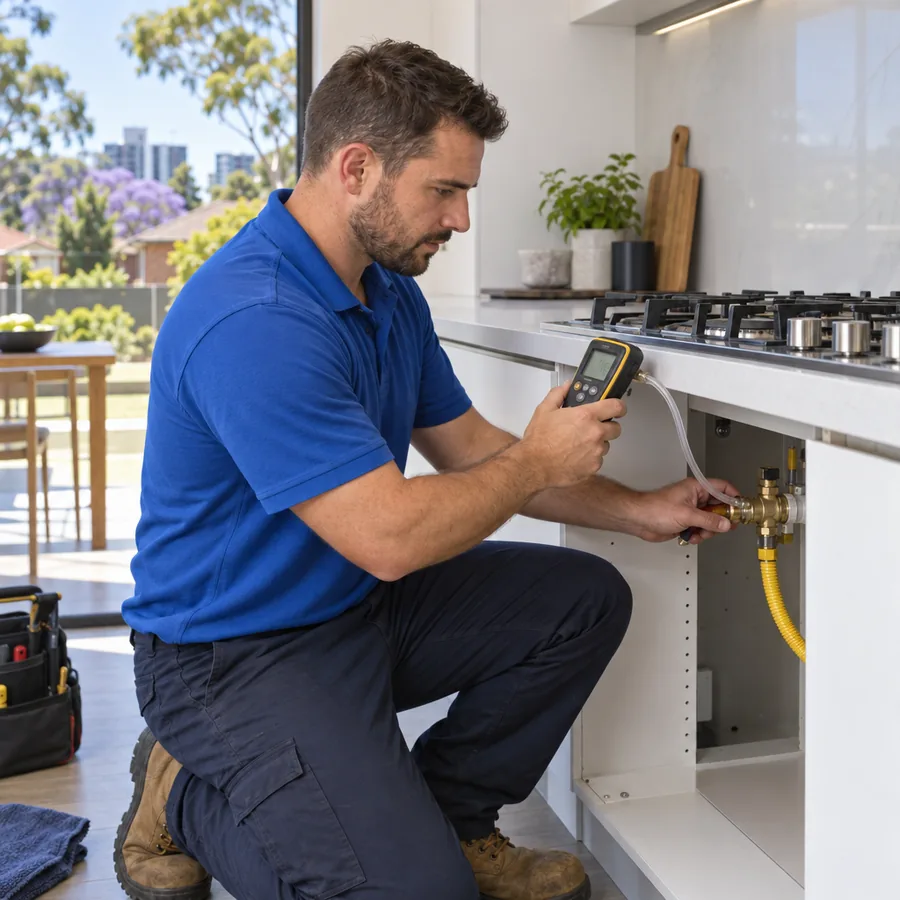
Jemena owns the gas main in the street, the service line to your property and the gas meter, and it is responsible for gas up to the outlet of the meter. Everything after that outlet belongs to the property owner and is the gasfitter’s territory: the consumer piping running to the house, the pipe inside the walls and under the floor, the isolation valves, the regulators on appliances and the appliances themselves. In practice this means a smell at the meter box or in the street is reported to the Jemena gas leaks line, and a smell at the cooktop, in the laundry near the hot water unit or in the ceiling is a call to a licensed gas plumber. On many older Blacktown and Guildford blocks the consumer piping is original galvanised steel that has been extended and patched over decades, so a pressure test on the whole line is often the first thing a gasfitter does before touching an appliance.
A gas smell: what to do first
If you can smell gas inside the house, get everyone outside and leave doors open behind you if it is safe to do so. Do not flick light switches on or off, do not use the phone until you are outside, do not start a car in an attached garage and do not light anything. If you know where the meter is and can reach it safely, turn the valve to the closed position. From outside, call the Jemena gas leaks line if the smell is at the meter or in the street, and call a 24 hour plumber with a gasfitting licence if the smell is inside or at an appliance. You will be told an honest arrival time on the phone. Gas building up in a closed room is the danger; a faint smell at the cooktop after a pot boils over is usually a blown-out burner, but treat it the same way until it has been checked.
Gas hot water in Western Sydney homes
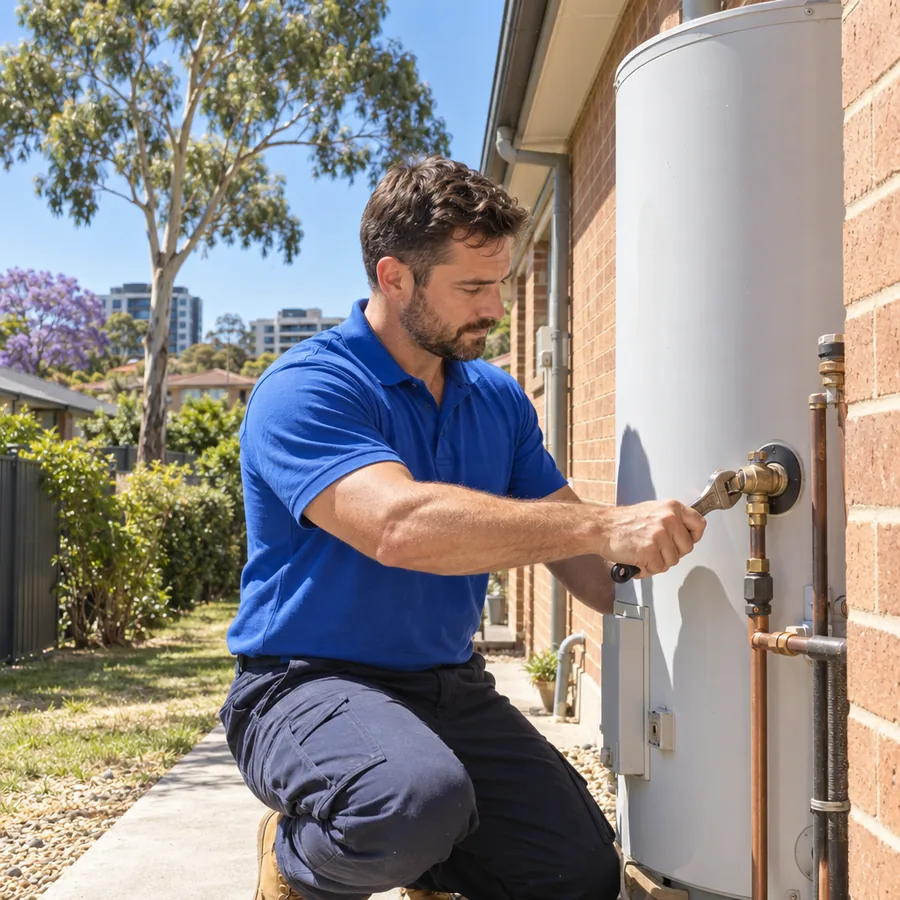
Gas hot water is the most common gas job in Parramatta and Blacktown. The 1950s to 80s fibro and brick homes in Toongabbie, Wentworthville, Doonside and Rooty Hill often have an external gas storage tank on a slab beside the laundry; the brick homes of Quakers Hill and Glenwood and the newer estates at Schofields and The Ponds tend to run continuous-flow units on an outside wall. Western Sydney heat is hard on both. A storage tank with a failed relief valve or a corroded flue, or a continuous-flow unit that ignites and drops out, needs the gas connection, the flue and the water side checked together. When a unit is replaced, the gasfitter confirms the pipe size can feed the new burner, because a larger continuous-flow unit on a line sized for an old storage tank starves the appliance. See hot water repairs for the water side of the job.
Cooktops, heaters, bayonets and outdoor points
Kitchen renovations across Parramatta, Merrylands and Blacktown keep up a steady demand for cooktop connections, and an induction changeover means a gas point capped off properly rather than left live behind a cabinet. Ducted gas heaters in the Hills and Penrith, wall furnaces in older Granville units and the bayonet points in lounge rooms across the region all need a flue check, a leak test and a regulator check when they are serviced. An outdoor bayonet for a barbecue on a Kellyville deck or a gas line to a pool heater in Castle Hill is new pipework that must be sized, tested and certified like any other. Older unflued heaters are worth a conversation with the gasfitter, particularly if anyone in the house has breathing problems.
Apartment gas risers in Parramatta, Westmead and Harris Park
The 1960s and 70s red-brick unit blocks of Harris Park, Westmead, Granville and Auburn and the newer towers around Parramatta Square and the Westmead health precinct run gas through shared risers, with a meter bank at ground level and consumer piping branching to each unit. A leak in the riser or a failed regulator can affect several units at once, and work on shared piping usually needs the strata manager and, on newer buildings, the building manager to isolate the supply. The gasfitter’s first job is to establish whether the fault is in the common riser or in the pipework inside one unit, because that decides who pays and whether strata needs to be involved. If you live in a unit in Westmead or Parramatta and smell gas in a corridor or the meter room, treat it as a Jemena or building matter and report it from outside.
Compliance certificates
Every gasfitting job in NSW that installs, alters or repairs gas pipework or connects an appliance must be certified by the licensed gasfitter who did the work, and you are given a copy of the certificate. It records the licence number, the address and the work done, and it is what an insurer, a buyer’s conveyancer or a strata manager asks for when a gas installation is questioned. A gas plumber who cannot or will not provide one is a warning sign. The certificate is also your record that the line was pressure tested and the appliance commissioned, which is why it is issued at the end of the job and not before.
What is included
- Leak testing of consumer gas piping from the meter outlet to every appliance, with a pressure test before and after any repair
- Repair or replacement of corroded galvanised gas lines, failed regulators and isolation valves in older homes
- Gas hot water: storage and continuous-flow unit connection, changeover, flue and relief valve checks
- Cooktop, oven, ducted heater, wall furnace and bayonet installation, servicing and safe disconnection
- New gas points for outdoor kitchens, barbecues and pool heaters, sized and tested for the appliance
- Diagnosis of shared gas risers and meter banks in unit blocks, working with the strata or building manager
- A compliance certificate issued for every gasfitting job, with the licence number recorded
Signs you should call now
- A gas smell inside the house, at an appliance or from the ceiling, even a faint one
- Hissing from a pipe, a regulator or the connection behind the cooktop
- Yellow or orange flames on a cooktop or heater that used to burn blue
- Soot marks or scorching around a heater flue or above a cooktop
- The hot water unit lights and then cuts out, or the pilot keeps going out
- Headaches, dizziness or nausea that clear when you leave the house
- A gas bill that has risen sharply with no change in the appliances or how they are used
If you smell gas, leave first and call from outside
Get everyone out of the house, leave doors open behind you if it is safe, and do not touch light switches, appliances, phones or the garage door opener on the way. Turn the valve at the gas meter off if you can reach it. A smell at the meter or in the street is reported to the Jemena gas leaks line; a smell inside the house or at an appliance is a job for a licensed gasfitter. Stay outside until the property has been checked with a detector.
Frequently asked questions
Is any plumber allowed to do gas work in NSW?
Only if the licence covers it. In NSW, plumbing, drainage and gasfitting are separate licence classes under the Home Building Act 1989, and a tradesperson must hold gasfitting on their NSW Fair Trading licence to install, alter or repair gas pipework or connect an appliance. Many plumbers hold all three classes, but not every plumber does. Ask for the licence number before the job starts and check it on the NSW Fair Trading public register online. The number on the compliance certificate must belong to the person who actually did the work.
What should I do if I smell gas in the house?
Get everyone out and leave the doors open behind you if you can do it safely. Do not touch light switches, appliances or the garage door opener, do not use a phone inside and do not light anything. If the gas meter is reachable, turn its valve off. From outside, call the Jemena gas leaks line for a smell at the meter or in the street, and a licensed gas plumber for a smell inside the house or at an appliance. Stay outside until someone with a detector has confirmed the house is clear.
Who fixes a gas leak, Jemena or a plumber?
It depends on where the leak is. Jemena owns the main in the street, the service line and the meter, so a smell at the meter box, at the kerb or from a hissing service pipe is reported to the Jemena gas leaks line. The consumer piping from the meter outlet into the house, and every appliance connected to it, belongs to the property owner and needs a licensed gasfitter. If you are not sure, report it to Jemena from outside first; they attend the meter and tell you if the problem is on your side.
Can a new home in Western Sydney still be connected to gas?
Yes. NSW has not banned new residential gas connections, so a new home in Schofields, Oran Park or Leppington can still be connected to the Jemena network where a main runs past the block, and existing homes can add gas appliances. The connection from the street to the meter is arranged with Jemena; the consumer piping from the meter to the house and the appliances is gasfitting work for a licensed gas plumber, who also issues the compliance certificate. Whether gas or electric suits a particular home is a separate conversation about running costs and the appliances you want.
Why does my gas hot water keep cutting out?
A continuous-flow unit that lights and then drops out usually has one of three problems: low gas supply because the pipe is undersized or a regulator has failed, a flow sensor or ignition fault, or a flue issue. On a storage tank, a pilot that keeps going out often points to a thermocouple, a blocked burner or wind across an outdoor unit on an exposed western wall. Western Sydney heat and sun shorten the life of outdoor units, so a gasfitter checks gas pressure at the appliance, the flue and the water side together rather than replacing parts one at a time.
Do I get a certificate after gas work?
You should. A licensed gasfitter must certify work that installs, alters or repairs gas pipework or connects an appliance, and the certificate lists the licence number, the property and the work done. Keep it with the house documents; it is what a conveyancer, insurer or strata manager asks for if the installation is ever questioned, and it is your record that the line was pressure tested and the appliance commissioned before it was left running. If a tradesperson finishes a gas job and cannot provide one, the work was probably not done under a gasfitting licence.
I am switching to an induction cooktop. What happens to the gas point?
The gas side of the changeover is often overlooked. The old cooktop's gas point has to be disconnected and capped by a licensed gasfitter, not left with a closed valve behind a cabinet, and the change is certified. If the cooktop was the last gas appliance in the house you can also ask Jemena about removing the meter and closing the account so a supply charge is not billed for gas you no longer use. The electrical side, a dedicated circuit for the induction cooktop, is separate work for a licensed electrician.