Western Sydney is where the city keeps its warehouses, its logistics hubs, its hospitals and many of its restaurants, and every one of those buildings has plumbing that answers to rules a house never meets. A commercial plumber in Western Sydney works across the industrial estates of Wetherill Park, Smithfield, Eastern Creek, Arndell Park, Seven Hills and Moorebank, the office towers and Church Street dining strip of Parramatta CBD, the strata blocks and shopping strips of Blacktown, Liverpool and Bankstown, and the health precincts around Westmead, Liverpool, Nepean and Campbelltown hospitals. This page covers the work those premises need, the Sydney Water rules on trade waste and backflow that sit behind much of it, what strata and real estate managers ask for, and how after-hours call-outs are handled so a business keeps trading.
Industrial estates: Wetherill Park to Moorebank
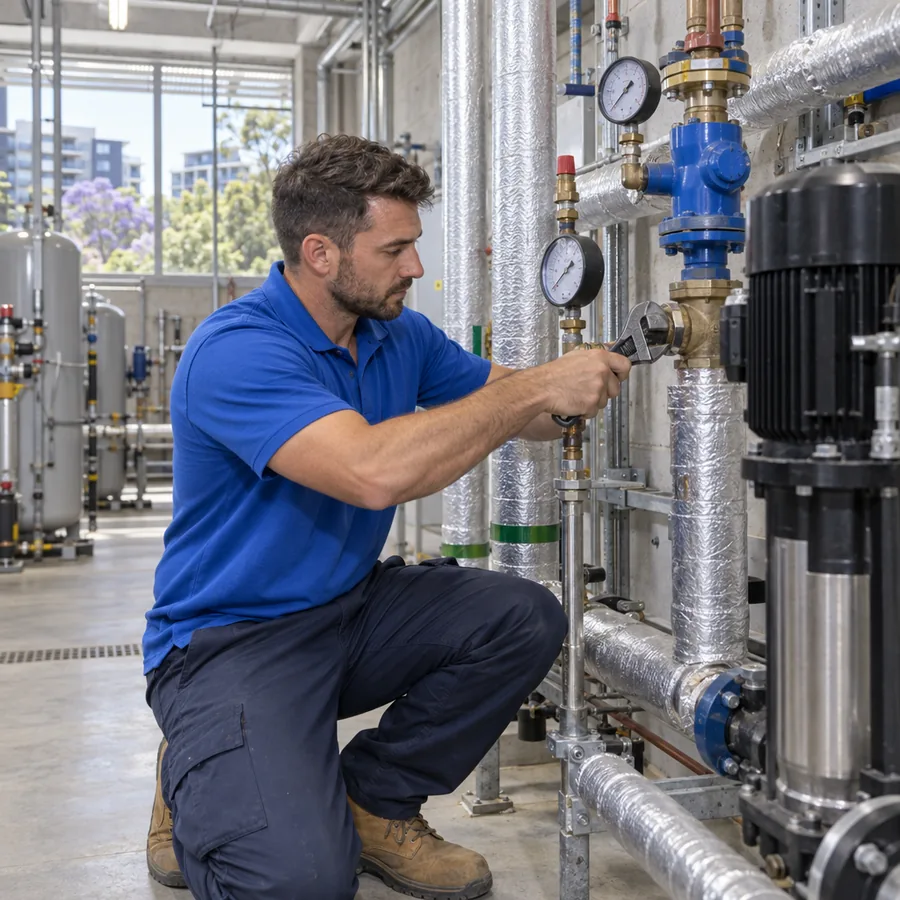
The industrial lots along the Cumberland Highway, the M7 and the M4 are big, flat, clay-based sites with long drain runs, shared amenities blocks and plant that runs around the clock. The Wetherill Park and Smithfield estates date from the 1970s and 80s and have earthenware and early PVC drains that block with silt and roots; Eastern Creek, Arndell Park and Moorebank are newer, with larger pipes and more pre-treatment devices under trade waste agreements. Typical calls are blocked amenities with a shift on site, a burst service line flooding a loading dock, an oil or silt arrestor that has stopped separating, a backflow device due for its annual test, and hot water failing in a staff kitchen. High mains pressure near Prospect Reservoir means pressure limiting valves and hot water relief valves in Wetherill Park and Smithfield are checked as a matter of course. Site inductions, SWMS paperwork and forklift zones are part of the job, not an afterthought.
Parramatta CBD offices and Church Street restaurants
Parramatta CBD has grown into a second city centre, with office towers around Parramatta Square, the light rail along Church Street since December 2024 and a restaurant strip that runs from the river up to Harris Park. Office buildings run hot water plant, tempering valves and pressure pumps, and a fault on one floor is often a shared riser that affects several tenancies. Restaurants and cafes on Church Street and in the arcades need a grease arrestor sized for the kitchen’s output, a trade waste agreement with Sydney Water, floor wastes that drain, and a plumber who can attend a blocked kitchen line before the dinner service rather than after. Fit-outs for a new cafe, a dental surgery or a medical suite are a mix of relocated water and waste points, a backflow device where the use calls for one, and the Certificate of Compliance lodged with NSW Fair Trading for the plumbing work. The same applies in Parramatta suburbs with their own strips, Merrylands, Granville and Auburn among them.
Grease traps and Sydney Water trade waste
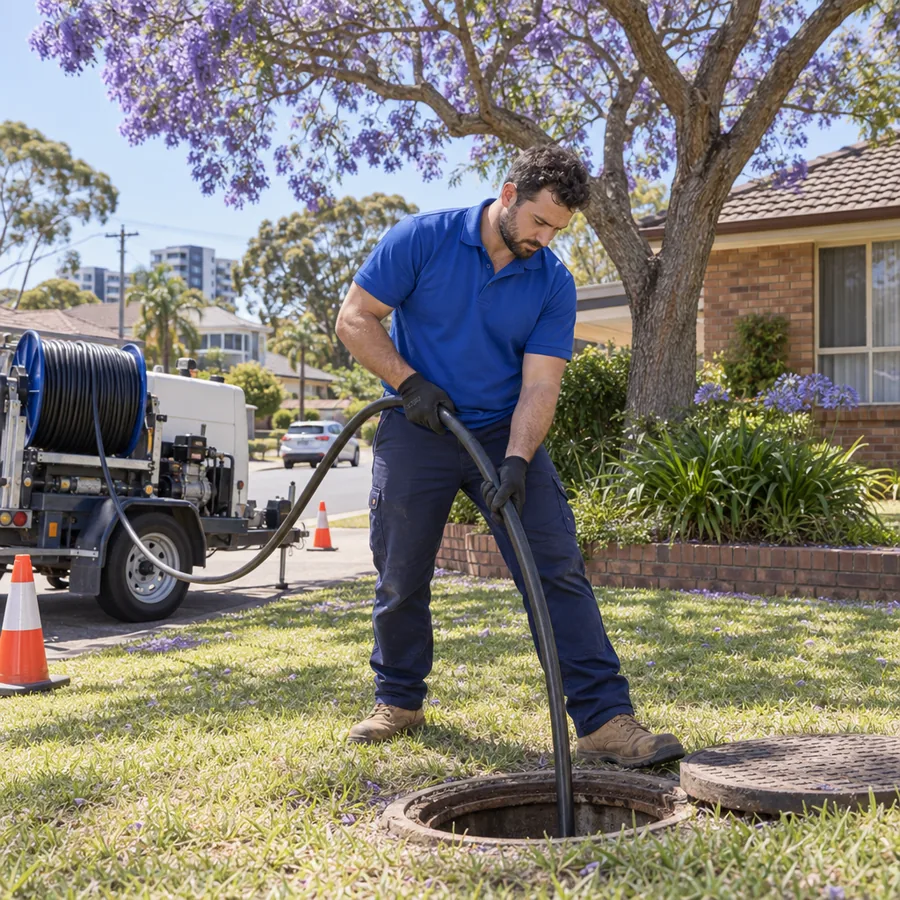
Anything that goes to the sewer beyond ordinary domestic-strength wastewater is trade waste, and Sydney Water requires a trade waste agreement or permit before it is discharged. For a food premises that means a grease arrestor, sized to the number of fixtures and the volume the kitchen produces, pumped out on a schedule the agreement sets and kept with records. For a workshop, a car wash or a manufacturer it means an oil, silt or chemical pre-treatment device. A commercial plumber installs and sizes the device to Sydney Water’s requirements, connects the kitchen or process drains through it, keeps the maintenance records, and clears the line when grease from a trap that was skipped sets in the pipe downstream. Grease that reaches a shared sewer in an arcade blocks every tenancy on that line, which is why the arrestor has to be maintained, not just installed. For clearing the resulting blockage, see blocked drains.
Backflow prevention testing
A backflow prevention device stops water that has been in contact with a hazard, a chemical process, a boiler, an irrigation system, a mortuary or a dental chair, from flowing back into the Sydney Water main. Sydney Water requires testable devices on medium and high hazard properties to be registered and tested every year by a licensed plumber with backflow accreditation, with the test report submitted to them. The premises that need one cover most of the industrial estates, food premises, medical and dental practices, childcare centres, schools, car washes and any site with a fire service or irrigation. A missed test becomes a Sydney Water notice, and a failed device becomes a replacement. The plumber tests, tags, reports and diarises the next test so the property manager does not have to.
Strata and real estate maintenance
Strata managers and property managers across Parramatta, Blacktown, Liverpool and Bankstown need a plumber who can walk into a common property fault and say, in writing, whether it belongs to a lot owner or the owners corporation. In the 1960s and 70s red-brick walk-ups of Harris Park, Westmead and Bankstown that means shared waste stacks, water risers and the common sewer line that blocks with grease and roots. In the towers around Parramatta Square and the Westmead health precinct it means pressure pumps, central hot water plant, fire services and the flexi hose floods that travel from one unit to the one below. A scheduled maintenance visit with a report after each one gives the manager a record for the strata committee and the insurer, and a real estate agent with houses in Seven Hills and Quakers Hill gets the same: one plumber, one invoice format, one licence number to check on the NSW Fair Trading register.
Hospital precincts and health facilities
Westmead, Liverpool, Nepean and Campbelltown hospitals each anchor a precinct of medical suites, pathology labs, dental practices, aged care and allied health rooms, and every one of those needs plumbing that meets health-setting rules: thermostatic mixing valves on outlets used by patients, backflow protection on equipment connections, tempering valves on hot water, and drains that are cleared without contaminating a clinical area. The private rooms around Westmead and Kingswood, the medical centres along the Hume Highway in Liverpool and the suites near Campbelltown Hospital are typical clients, usually on a maintenance schedule with compliance testing built in. Work in these settings is planned with the practice manager so treatment rooms are not out of action during appointments.
After-hours call-outs for businesses
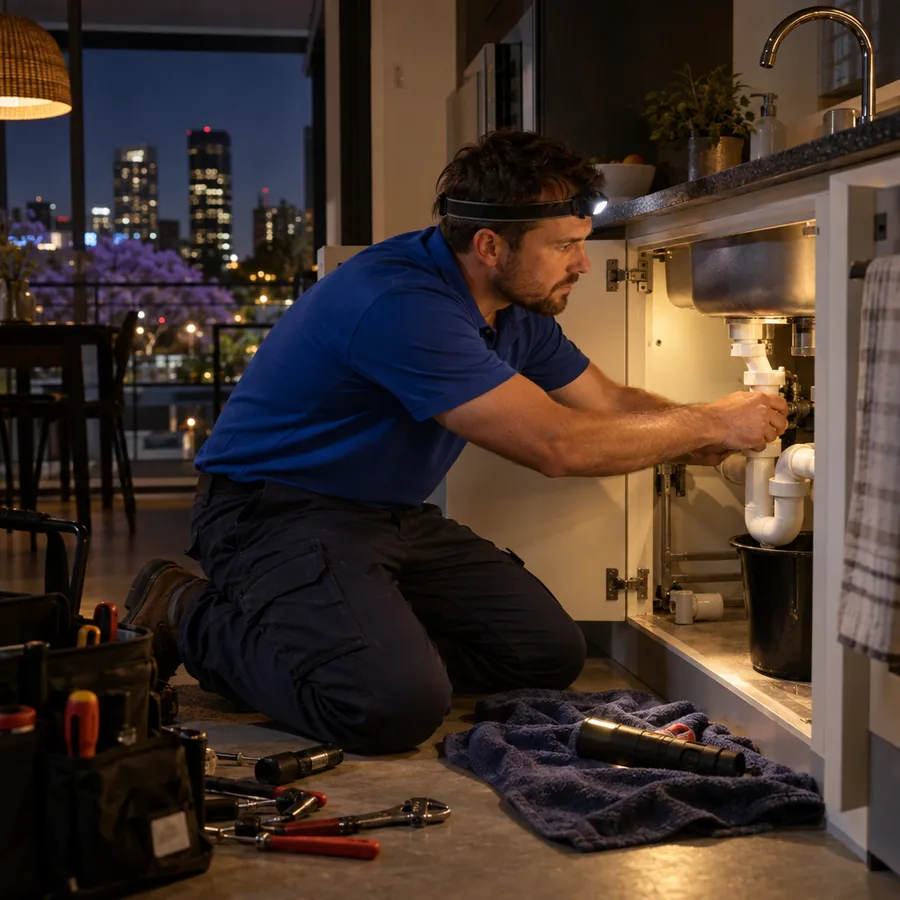
A burst pipe in a warehouse at night, a blocked drain in a restaurant kitchen on Friday evening, no hot water in a childcare centre before opening, or a flooded plant room in an office tower on a Sunday are the calls that decide whether a business trades the next day. The 24 hour plumber line covers commercial premises across the region, from Seven Hills and Blacktown out to Penrith, Liverpool and Campbelltown, and you are told an honest arrival time on the phone along with the after-hours rate before anyone is dispatched. The repair is quoted before work starts, the isolation is planned so the rest of the building keeps running, and the report is written for the landlord, the strata manager or Sydney Water as needed.
What is included
- Backflow prevention device installation and annual testing, with the test report lodged with Sydney Water
- Grease trap and arrestor installation, sizing and maintenance under a Sydney Water trade waste agreement
- Commercial drain clearing and CCTV inspection for warehouses, food premises and unit block common lines
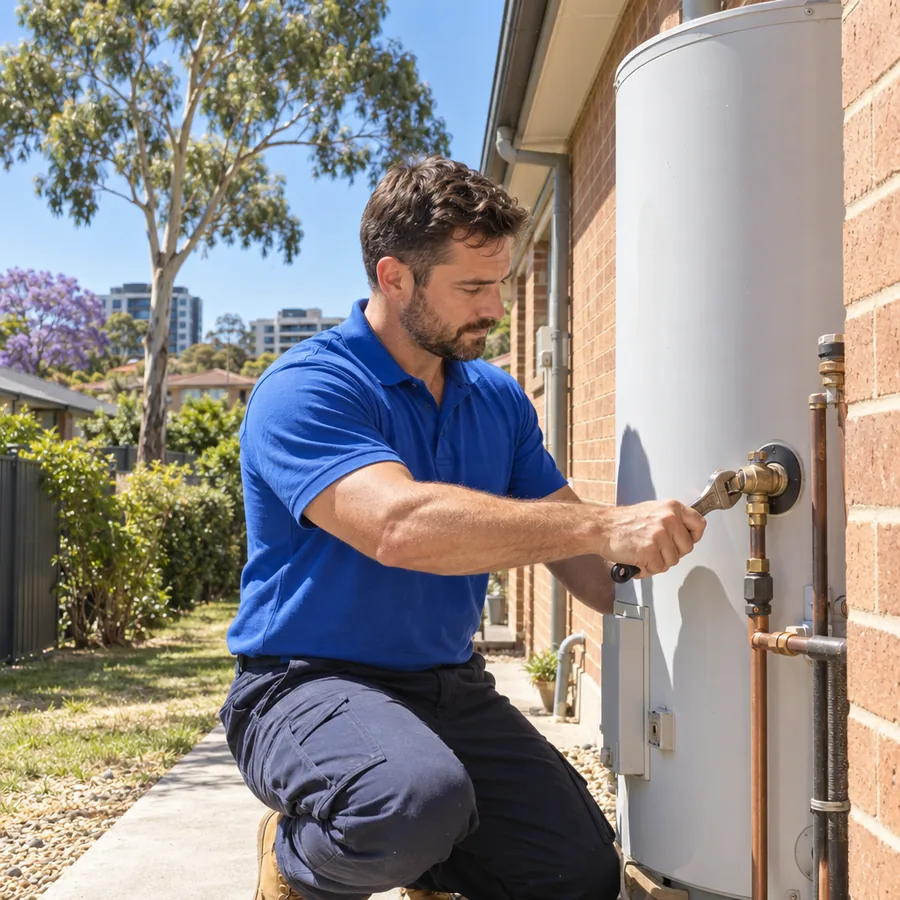
- Hot water plant, tempering valves and thermostatic mixing valves in offices, childcare and health facilities
- Fit-outs for cafes, restaurants, dental and medical rooms in Parramatta CBD and suburban shopping strips
- Scheduled maintenance for strata plans, real estate portfolios and industrial landlords with written reports
- After-hours and weekend call-outs for burst pipes, blocked drains and no hot water in trading premises
Signs you should call now
- A backflow device that is due for its annual test or has no test record on file
- Grease smell, slow kitchen drains or a grease trap overflow at a restaurant or cafe
- A Sydney Water notice about trade waste, backflow or an unregistered device on the property
- Blocked toilets or floor wastes in a warehouse amenities block with staff on shift
- A burst pipe, no hot water or a flooded plant room outside trading hours
- A new tenancy fit-out that needs water, waste and gas points moved or added
- A strata plan or property manager needing a licensed plumber's report on a recurring fault
Sewage or grease overflow in a food premises
Stop using the kitchen drains, keep staff and customers out of the affected area and do not hose an overflow into a stormwater grate or the car park, because that is a Sydney Water and council matter on top of the blockage. If sewage has surfaced in a food preparation area, the area has to be cleaned and sanitised before trading resumes, and your council's environmental health officer may need to be told.
Frequently asked questions
What does a commercial plumber do that a domestic plumber does not?
The trade is the same and the licence from NSW Fair Trading is the same, but the work sits inside a set of rules a house never meets. Commercial premises deal with Sydney Water trade waste agreements, registered backflow devices with annual testing, thermostatic mixing valves in health and childcare settings, fire service connections, larger drains shared between tenancies, and site inductions and access hours. A commercial plumber also plans work around trading, so a restaurant on Church Street is not closed on a Saturday night for a job that could be done on Monday morning.
Does my business need a trade waste agreement with Sydney Water?
If the business discharges anything other than ordinary domestic-strength wastewater to the sewer, Sydney Water requires a trade waste agreement or permit before it is discharged. That covers restaurants, cafes, takeaway shops and commercial kitchens through their grease arrestors, mechanics and car washes through oil and silt arrestors, and manufacturing and food processing across the industrial estates. The agreement sets what pre-treatment device is needed, how often it is pumped and what is monitored. A commercial plumber sizes and installs the device to Sydney Water's requirements and keeps the maintenance records the agreement asks for.
How often does a backflow prevention device need testing?
Sydney Water requires testable backflow prevention devices on medium and high hazard properties to be registered with them and tested annually by a licensed plumber with backflow accreditation, with the test report submitted to Sydney Water. Properties that typically need them include food premises, workshops, medical and dental practices, childcare centres, sites with irrigation or fire services, and most industrial lots in Wetherill Park, Smithfield and Eastern Creek. If a device on your property has no test record, or Sydney Water has written to you about an untested device, that is the call to make before it becomes a compliance issue.
Can the work be done after hours so we do not have to close?
Yes. For trading premises the sensible time for planned work is often outside business hours, and for an emergency the call is answered around the clock, with an honest arrival time given on the phone. A cafe in Parramatta CBD, a warehouse running night shifts in Arndell Park or a strata block with residents home all day each need a different approach, and the timing is agreed when the job is booked. The after-hours rate is explained before anyone is dispatched, so there are no surprises on the invoice for a Sunday call-out.
Who is responsible for plumbing in a leased commercial premises, the tenant or the landlord?
It depends on the lease, and most commercial leases in NSW put day-to-day maintenance and repairs of fixtures inside the tenancy on the tenant, with structural and capital items, and often the building's main services, on the landlord. Grease trap pumping and backflow testing usually fall to whoever the lease names as responsible for compliance, which is worth checking before a Sydney Water notice arrives. A commercial plumber's report identifies where the fault is and whether it is inside the tenancy or in a shared service, which is often what settles the question between the two parties.
Do you look after strata plans and real estate portfolios?
Yes. Strata managers and property managers across Parramatta, Blacktown, Liverpool and Bankstown need a licensed plumber who can attend common property faults, report in writing on whether a leak is a lot owner's or the owners corporation's, and handle the recurring work: shared drain lines that block with grease in unit blocks, hot water plant, pressure pumps in the newer towers and the flexi hose floods that travel between floors. Scheduled maintenance with a report after each visit gives the manager a record for the committee and the insurer, and reduces the number of emergency calls.
What happens if a grease trap has not been pumped?
The trap fills with grease and solids, stops separating them from the wastewater, and passes them into the sewer, where they set in the pipe. The first symptoms in the kitchen are slow floor wastes, a smell and eventually an overflow through the trap lid or a floor waste. Sydney Water can inspect and, under a trade waste agreement, require the trap to be pumped on a set schedule and take action if it is not. A commercial plumber clears the blocked line, arranges the pump-out and, if the trap is undersized for the kitchen's output, quotes a larger arrestor.