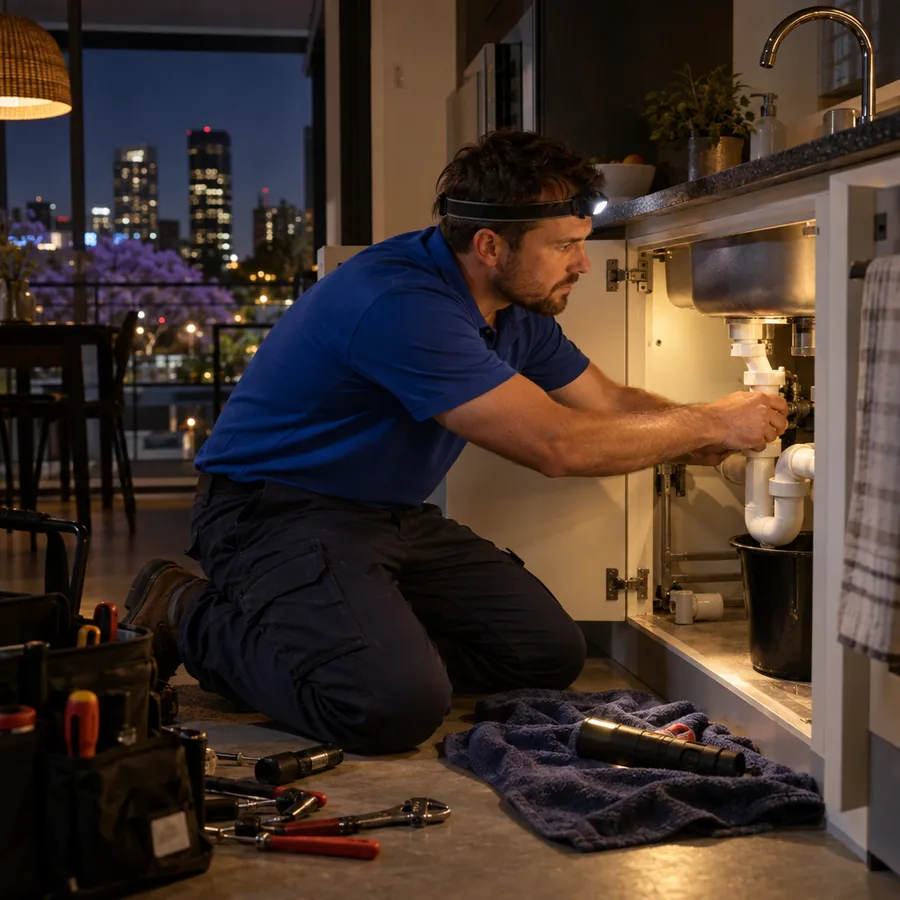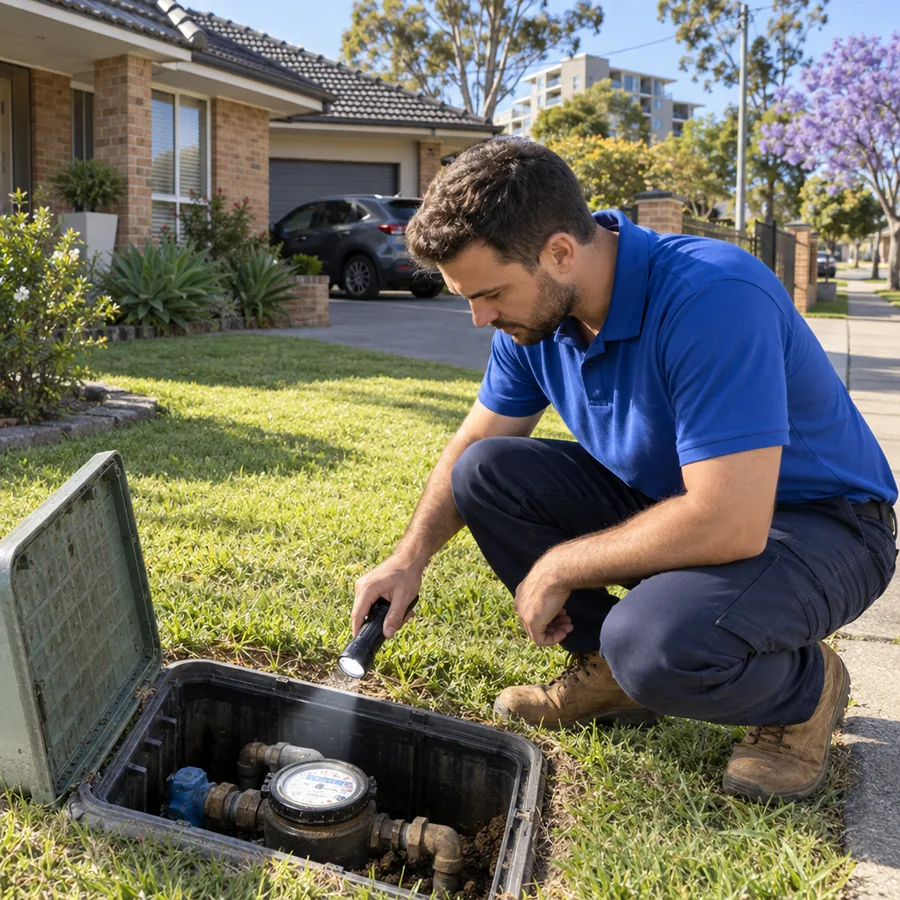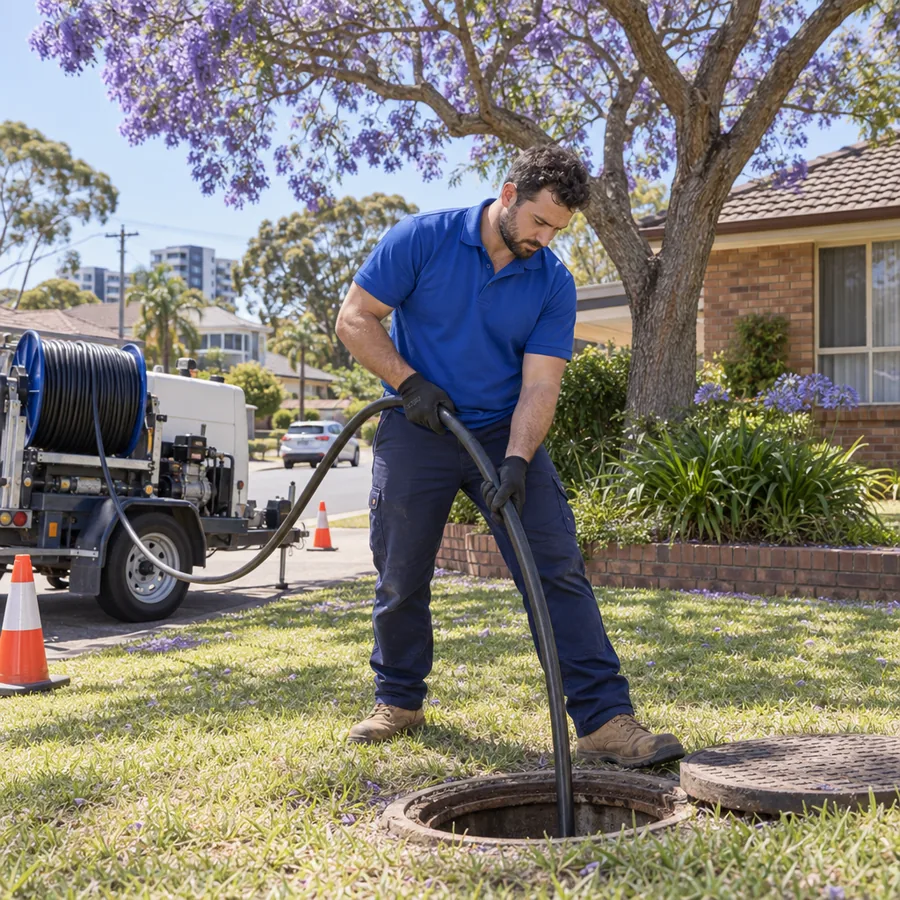
Blocked drains in Parramatta are rarely a one-off. Under the older streets the sewer is earthenware laid in short lengths with rigid joints, the ground is Cumberland Plain clay that swells in a wet storm season and shrinks in drought, and above it stand the camphor laurels, liquidambars, jacarandas and figs the older suburbs are known for. A joint cracks, roots move in, and the line blocks again every few months until the crack is dealt with. In the unit blocks and along Church Street the cause is more often grease, and in summer storms it is the sewer main itself surcharging back up the private line.
Earthenware sewers on Cumberland Plain clay
Most of Parramatta, Cumberland and Blacktown sits on the Cumberland Plain, a reactive clay derived from Wianamatta shale. It swells when it is wet and shrinks when it dries, and across a year of summer thunderstorms and dry spells the ground under a block moves enough to shift a rigid pipe. Earthenware sewer pipe, standard under the Federation homes of North Parramatta and Harris Park, the 1950s and 60s fibro and brick homes of Guildford, Merrylands and Toongabbie, and the brick veneers and Housing Commission estates of Blacktown and Mount Druitt, was laid in short lengths with joints that cannot flex. The clay moves, the joint cracks or the pipe drops out of line, and from then on moisture leaks into the soil around it and roots follow. On the Hawkesbury sandstone ridges of North Parramatta, Winston Hills and the Hills District the soil is shallower and the blocks steeper: less clay movement, but long stormwater runs, and it is the stormwater line rather than the sewer that tends to fail.
Camphor laurels, liquidambars, figs and jacarandas
Roots do not break a sound pipe. They find the moisture escaping from a cracked joint and follow it in, first as fine hairs, then as a mat that catches paper, wipes and grease until the line stops. The camphor laurels and liquidambars lining the older streets of North Parramatta, Westmead and Granville, the jacarandas in gardens across Cumberland, the Moreton Bay and Port Jackson figs around Parramatta Park and the river, and the eucalypts and paperbarks of Blacktown are all capable of it. Cutting the roots with a jetter clears the drain. Sealing the joint they came through is what stops them coming back. The longer version is in why drains block in Western Sydney.
Sydney Water, the point of connection and your private sewer line
Sydney Water owns the sewer main, usually running along the rear or side of the block or under the street, and is responsible for it up to the point of connection with your property, normally at or near the boundary. The owner owns the private sewer line from the house to that point, including the overflow relief gully, the inspection openings and any boundary shaft. A blockage or crack in the private line is the owner’s to clear and repair with a plumber licensed with NSW Fair Trading under the Home Building Act 1989. A blockage in the main, a surcharging manhole or a fault at the connection is reported to Sydney Water. When the CCTV inspection shows the fault is beyond the point of connection, you are told so rather than quoted for work that is not yours to pay for.
Clearing and diagnosing: jetting and CCTV
A high-pressure water jetter clears roots, grease, silt and foreign objects and scours the pipe wall, which a hand cable cannot do. Once the line is flowing, a CCTV camera goes through it and you see what caused the blockage, where it is and how deep, with the location marked on the surface of your block. For a recurring blockage, or any pre-1980s home with earthenware pipes, the camera footage is what separates a diagnosis from a guess, and it is kept for you, your insurer or your strata manager.
Repair: relining or replacement
Where the pipe is cracked but still in line, relining is usually the answer. A resin-impregnated liner is drawn into the existing pipe and cured in place, forming a new smooth, jointless pipe inside the old one that roots cannot enter. It is done through existing access points, so driveways, gardens, paths and slab floors stay intact, which matters on the tight blocks of Harris Park and Granville. Where a section has collapsed, or dropped so far the liner cannot pass, that section is excavated and replaced with PVC and the rest relined if needed. Both options are quoted in writing before any work starts.
Sewer surcharge and the overflow relief gully in summer storms
Western Sydney’s summer afternoon thunderstorms put stormwater into the sewer through cracked pipes, downpipes wrongly connected to the sewer and flooded manholes, and the main fills faster than it can drain. It then backs up the private lines of every house on the run. That is what the overflow relief gully is for: a grated drain outside, set lower than the floor wastes inside, so a surcharge spills onto the lawn rather than into the shower. A gully that has been paved over, buried under a deck, capped with a solid lid or raised above the floor level by a later renovation sends the surcharge inside. The gully is checked, raised or replaced on every blocked drain visit. If sewage is surfacing at night or on a weekend, the 24 hour plumber page explains how the call is handled.
Stormwater flooding garages and downstairs rooms
Stormwater is a separate system. Downpipes, surface grates, the agricultural drain behind a retaining wall and the line to the street carry rain, and they block with leaves, silt and roots. On the sloping sandstone blocks of North Parramatta, Winston Hills and Baulkham Hills the runs are long and the garage is usually the lowest point, so when the line is blocked the water has nowhere else to go. Homes on the flats beside Parramatta River, Toongabbie Creek and Prospect Creek, which flood in big storms, need the stormwater clear before the season starts. Jetting and camera inspection work on stormwater exactly as they do on sewers, and a crushed or root-blocked section can be relined or replaced before the next storm.
Grease in unit blocks and Church Street restaurants
The 1960s and 70s red-brick unit blocks of Harris Park, Westmead, Granville, Auburn and Merrylands share one sewer line between many kitchens. Fat from every unit cools and sets on the pipe wall until the shared line closes over, usually backing up first in the lowest unit. The restaurants along Church Street and in Harris Park run far more fat through their lines and rely on a grease trap being pumped out on schedule; when it is not, the trap overflows into the sewer and the whole building backs up. Jetting scours the fat off the pipe wall; a hand cable only pokes a hole through it. A blocked toilet on its own, with every other drain in the home running freely, is usually a fault at the fixture rather than the sewer, and is covered under toilet repairs.
What is included
- High-pressure water jetting to clear tree roots, grease, silt and foreign objects from sewer and stormwater lines
- CCTV camera inspection showing the cause and the exact spot on the block where the pipe is cracked or collapsed
- Pipe relining to seal cracked earthenware sewers without digging up the driveway, garden or slab
- Excavation and replacement of collapsed sections where a liner cannot pass
- Overflow relief gully checked, raised or replaced so a surcharge goes outside instead of into the shower
- Stormwater lines, surface grates, downpipes and pits cleared before the next summer storm
- Clear advice on whether the fault is on your private sewer line or on the Sydney Water side of the point of connection
Signs you should call now
- Sewage or grey water coming up through a shower, floor waste or laundry trough
- The overflow relief gully in the yard is overflowing or smells strongly
- The toilet gurgles when a basin or bath drains, or the water level in the pan rises and falls
- More than one drain in the house is slow at the same time
- A patch of unusually green or sunken lawn over where the sewer line runs
- The garage, carport or lowest room floods every time it storms
- A sewer smell inside the unit or around the outside drains of the block
Sewage inside the house is a health issue
Keep children and pets away from any area where sewage has surfaced, wear gloves if you have to touch anything, and do not pour bleach or chemical drain cleaner into a blocked sewer. It does nothing to roots and makes the line hazardous for whoever clears it. Stop using water in the house until the line is clear.
Frequently asked questions
Why do sewers in Parramatta block so often?
Most of Parramatta and Western Sydney sits on the Cumberland Plain, reactive clay that swells in wet weather and shrinks in drought. Earthenware sewer pipes laid before the 1980s under the Federation homes of North Parramatta and Harris Park, the fibro and brick homes of Guildford, Merrylands and Toongabbie and the older streets of Blacktown were laid in short lengths with rigid joints. The clay moves, a joint cracks or drops, moisture leaks into the soil, and tree roots follow it in. From then on the line blocks every few months until the crack is sealed.
Which trees cause the most blocked drains around Parramatta?
Camphor laurels and liquidambars in the older streets of North Parramatta, Westmead and Granville, jacarandas in gardens across Cumberland and the Hills, the Moreton Bay and Port Jackson figs of old Parramatta around the park and the river, and the eucalypts and paperbarks of Blacktown, Seven Hills and Mount Druitt. Big street plane trees in older suburbs do the same. Roots do not break a sound pipe; they find the moisture at a cracked joint, enter as fine hairs and grow into a mat that catches paper and wipes. Jetting cuts the roots. Relining the joint is what stops them returning.
Who is responsible, me or Sydney Water?
Sydney Water owns the sewer main, usually along the rear or side of the block or under the street, up to the point of connection with your property, normally at or near the boundary. The owner owns the private sewer line from the house to that point, including the overflow relief gully, inspection openings and any boundary shaft. A blockage in the private line is yours to clear and repair with a licensed plumber. A blockage in the main or a surcharging manhole is reported to Sydney Water, and if the camera shows the fault is beyond the connection you are told so rather than quoted for it.
What is sewer surcharge and why does it happen in summer storms?
In a Western Sydney summer thunderstorm, stormwater gets into the sewer through cracked pipes, illegal downpipe connections and flooded manholes, and the sewer main fills faster than it can drain. The water backs up the private lines of every house on the run. That is why every property has an overflow relief gully outside, a grated drain set lower than the floor wastes inside, so a surcharge spills onto the lawn instead of into the shower. A gully that has been paved over, buried under a deck, capped or raised above the floor level sends the surcharge inside. Checking the gully is part of every blocked drain visit.
Why does my garage flood every time it storms?
Stormwater is a separate system. Downpipes, surface grates, the agricultural drain behind a retaining wall and the stormwater line to the street carry rain, and they block with leaves, silt and roots just as sewers do. On the steeper sandstone blocks of North Parramatta, the Hills and Winston Hills, the stormwater runs are long and the garage is often the lowest point, so when the line is blocked in a summer storm the water has nowhere else to go. Jetting the stormwater line and inspecting it with a camera usually finds a crushed or root-blocked section that can be repaired before the next storm.
What is pipe relining and does it work on old earthenware?
Relining draws a resin-impregnated liner into the existing pipe and cures it in place, forming a new smooth, jointless pipe inside the old one that roots cannot enter. It is done through existing access points, so driveways, gardens, paths and slab floors are left intact, which matters on the tight blocks of Harris Park and Granville as much as in a landscaped yard in Baulkham Hills. It works well on cracked earthenware that is still in line. Where a section has collapsed or dropped so far the liner cannot pass, that section is excavated and replaced first and the rest relined.
Why do drains in unit blocks and restaurants block with grease?
The 1960s and 70s red-brick unit blocks of Harris Park, Westmead, Granville and Merrylands share a single sewer line between many kitchens, and cooking fat from every unit cools and sets on the pipe wall until the shared line closes over, usually at the lowest unit. The restaurants along Church Street and in Harris Park run far more fat through their lines and rely on a grease trap that must be pumped out on schedule. When it is not, the trap overflows into the sewer and the whole block backs up. Jetting scours the fat off the pipe wall; a hand cable only pokes a hole through it.