Bathroom and kitchen plumbing in Parramatta covers everything from a dripping mixer in a Westmead unit to the full rough-in for a renovated bathroom in a Federation home in North Parramatta or a granny flat behind a fibro cottage in Blacktown. The common thread is that in NSW every one of those jobs, apart from changing a washer, is licensed plumbing work under NSW Fair Trading, and every one of them ends with a Certificate of Compliance in your hand. This page covers what a bathroom and kitchen plumber actually does on a renovation, the tap and mixer work that makes up most call-outs, dishwasher, fridge and laundry connections, the line between plumbing and waterproofing, strata approval for unit renovations, and the granny flat boom across Blacktown and Bankstown.
Renovating a bathroom in Parramatta: rough-in to fit-off
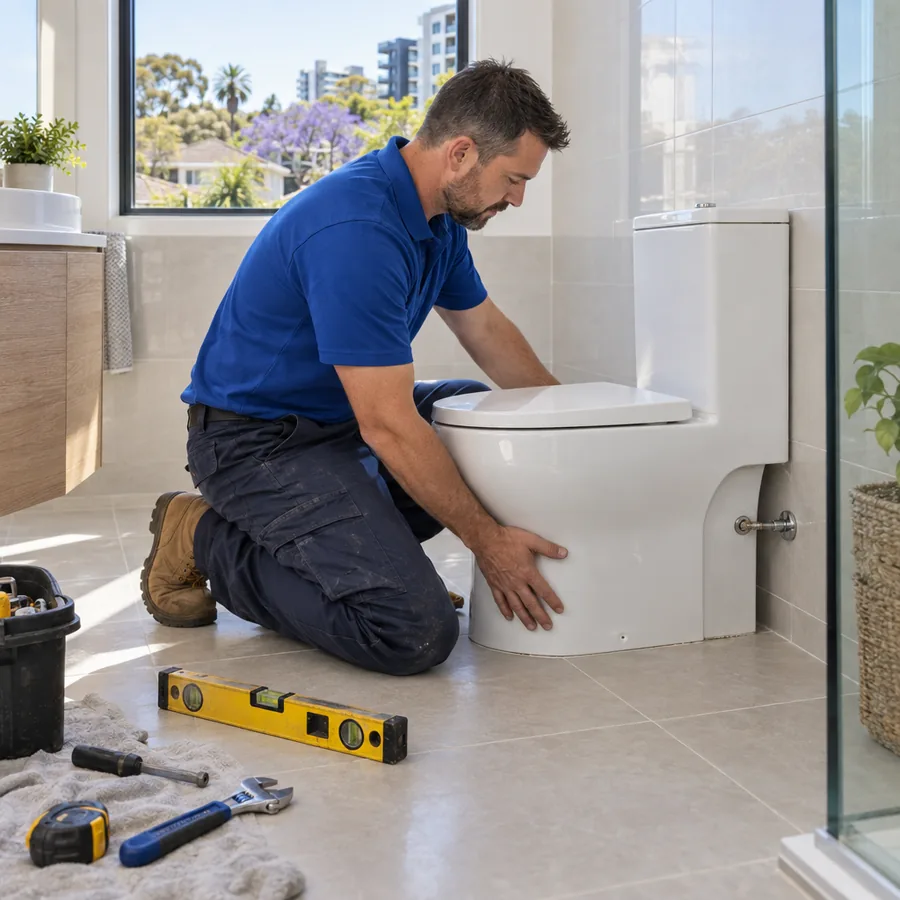
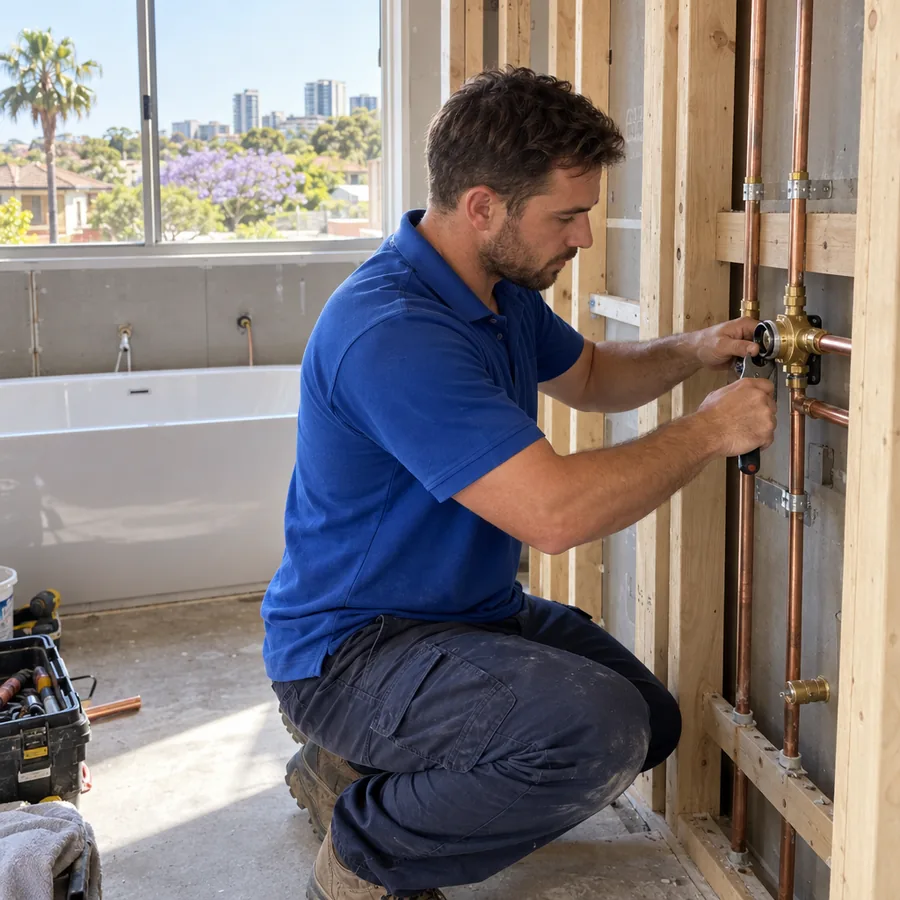
A bathroom renovation is two plumbing visits with other trades in between. The rough-in comes first: the old fixtures come out, and the water and waste points are relocated or replaced to suit the new layout, with new copper or PEX to the taps, a new waste to the shower and floor waste at the right fall, and the toilet connection set for the suite you have chosen. Everything is pressure tested and left capped. Then the waterproofer applies the membrane, the tiler tiles, and the plumber returns for the fit-off: taps, mixer, shower, vanity, bath and toilet connected and checked, and the certificate lodged. On the timber floors of the 1900s to 1930s homes around Parramatta Park and Harris Park there is room to move wastes; on the slabs of Quakers Hill and Glenmore Park brick veneers, moving a toilet means cutting concrete, which is planned for rather than discovered on the day.
Taps, mixers and the flexi hose problem
Most bathroom and kitchen calls are about taps. A basin mixer that drips, a wall mixer behind tiles that has gone stiff, a shower that runs hot when the kitchen tap is turned on, or the kitchen mixer that has come loose on the bench. The 1950s to 80s fibro and brick homes of Merrylands, Guildford, Toongabbie and Seven Hills still have plenty of original tap sets where the breech is corroded, and the newer towers around Parramatta Square and Church Street have mixers fed by braided flexi hoses that are now at the age where they fail. A perished or bulging flexi hose under a vanity is replaced on sight, and an isolation valve is fitted if there is none, because a hose that lets go in a unit while nobody is home is the leak that reaches the unit below. High mains pressure in low suburbs like Guildford and Wetherill Park wears out washers and hoses faster, and a pressure limiting valve is worth a conversation on those streets. Where the leak is behind the tiles rather than at the tap, leak detection finds it first.
Kitchen plumbing: sinks, dishwashers and plumbed fridges
Kitchen renovations across Parramatta, Blacktown and Bankstown almost always involve a new sink and mixer, a dishwasher connection and, increasingly, a plumbed fridge for water and ice. The dishwasher needs a cold water tap with an isolation valve and a drain connection through the sink waste or a standpipe; the fridge needs a small cold line run through the cabinets to the fridge space, with its own valve. Kitchens that move the sink to an island need a waste with enough fall back to the stack, and on a slab that is a concrete cut before the cabinets go in. If the cooktop is changing from gas to induction, the gas point is capped and certified by a licensed gasfitter rather than left live behind a drawer.
Laundries
Laundry plumbing in Western Sydney runs from the original concrete tub in a 1950s St Marys fibro to the compact European laundry in a Wentworthville apartment. The plumber installs or replaces the tub and taps, fits washing machine taps with a proper standpipe or tub outlet, and checks the floor waste, which in a unit is the only thing between a failed washing machine hose and the neighbour’s ceiling. Laundries relocated into a bathroom or a hallway cupboard during a renovation need a waste and a floor drain of their own, and that is worked out at the rough-in.
Waterproofing: who does what
The plumber does not waterproof unless they hold a separate waterproofing licence, and most do not. In NSW, wet area waterproofing is its own licence class, and a bathroom renovation involves a plumber for the pipework and fixtures and a licensed waterproofer for the membrane. The plumber’s part is to finish and pressure test every pipe and waste before the membrane goes on, set the floor waste and shower outlet at the right height for the tiler, and come back after tiling for the fit-off. A failed membrane is the leading cause of shower leaks into the unit below in Parramatta and Westmead blocks, so the sequence matters more than any single fitting. Ask any builder or tradesperson offering the whole bathroom which licences they hold for each part of it.
Strata approval for unit renovations in Parramatta, Westmead and Harris Park
Renovating a bathroom or kitchen in a unit in Parramatta, Westmead or Harris Park needs the owners corporation’s approval before the first tile comes off. Under NSW strata rules, work that affects waterproofing or common pipes is treated as a major renovation, and the strata manager will ask for the scope, the licence numbers of the plumber and waterproofer, and insurance details. In the 1960s and 70s red-brick walk-ups, the waste stacks and water risers are shared between units, so any change to them is strata’s decision, and the plumber checks that before a layout is drawn. The plumber’s written scope is often what gets the approval through.
Granny flats in Blacktown, Bankstown and beyond
The granny flat is now part of the streetscape in Blacktown, Yagoona, Bass Hill, Chester Hill and Revesby, where a 1950s or 60s house on a large clay block leaves room for a secondary dwelling at the back. The plumbing is a branch off the existing water service, a sewer connection into the private sewer line with enough fall, and usually a separate hot water unit. On a flat Cumberland Plain block with the existing sewer running along the front, the distance and depth of that connection is what decides the job, and it is priced before anything is dug. Blacktown’s steady demand for bathroom work, from granny flats to the second bathroom added to a Seven Hills brick veneer, comes from the same place: large blocks, ageing houses and families who need more of everything. For faults at the toilet itself, toilet repairs covers cisterns, seals and blockages.
What is included
- Bathroom renovation rough-in: relocating water and waste points for a new layout, then fit-off once tiling is done
- Tap, mixer and shower head replacement, including wall mixers behind tiles and replacing perished flexi hoses
- Toilet suite, vanity, bath and shower installation with a Certificate of Compliance for the plumbing work
- Kitchen sink, mixer, dishwasher and plumbed fridge connections with a proper isolation valve on each
- Laundry tubs, washing machine taps and floor waste checks, including laundries relocated in a renovation
- Coordination with your tiler and waterproofer so the plumbing is pressure tested before the membrane goes on
- Granny flat and secondary dwelling plumbing connected to the existing sewer and water service
Signs you should call now
- A tap that drips no matter how hard it is turned off, or a mixer that has gone stiff or loose
- Water pooling under the sink or vanity, or a flexi hose that is bulging, rusty or kinked
- A shower with poor pressure or a temperature that swings when someone else uses water
- A bathroom, kitchen or laundry renovation where fixtures are moving from their current spots
- A new dishwasher or fridge with a water connection that needs a tap where there is none
- A granny flat, studio or second bathroom being added to the property
- A strata manager asking for a licensed plumber's report before a unit renovation is approved
Frequently asked questions
Do I need a licensed plumber just to change a tap?
In NSW, plumbing work that connects to the water supply or the drainage system must be carried out by a person licensed with NSW Fair Trading, and that includes replacing a tap set, a mixer or a shower head assembly. Changing a washer or a tap handle on an existing tap is not licensed work and you can do that yourself. The practical reason to use a plumber for a mixer or wall tap is that the old fitting often does not come out cleanly, and a cracked breech or a stripped thread behind tiles is a much bigger job than the tap.
Does the plumber do the waterproofing in a bathroom renovation?
Not unless they hold a separate waterproofing licence. In NSW, waterproofing wet areas is its own licence class, and most plumbers do not carry it, so a bathroom renovation usually involves a plumber for the rough-in and fit-off and a licensed waterproofer for the membrane. What the plumber does is make sure every pipe and waste is finished and pressure tested before the waterproofer starts, and that the floor waste and shower outlet sit at the right height for the membrane and the tiler. If your builder offers one person for all three, ask which licences they actually hold.
Do I need strata approval to renovate my unit bathroom?
Almost always. In NSW strata schemes a bathroom renovation is generally treated as a major renovation because it touches the waterproofing and often the common pipes in the walls, and the owners corporation has to approve it by resolution before work starts. The strata manager usually wants the scope of work, the names and licence numbers of the plumber and waterproofer, and evidence of insurance. In the older blocks of Harris Park, Westmead and Granville the plumber also checks whether the waste stack and water risers are shared, because a change to a shared pipe needs strata's sign-off on its own.
Can the toilet or shower be moved to a different spot?
Usually, at a cost that depends on the floor. On a timber floor in a Federation home in North Parramatta or a 1950s fibro in Wentworthville, the waste can be rerouted under the floor with reasonable access. On a concrete slab in a brick veneer home or a unit, moving a toilet means cutting the slab to run a new waste to the stack with the right fall, which is possible but adds to the job. The plumber looks at the existing stack position and the fall available before the plan is finalised, so the layout is not drawn around something that cannot be plumbed.
What is involved in connecting a dishwasher or a fridge with a water line?
A dishwasher needs a cold water connection with its own isolation valve, a drain connection through a spigot on the sink waste or a standpipe, and enough hose length to sit in the cabinet without kinking. A plumbed fridge needs a small cold line, again with an isolation valve, run through the cabinets to the fridge position. The valve is the important part; a connection with no way to isolate it means the kitchen is out of action if the hose fails. Braided flexi hoses on both appliances are checked and replaced if they are perished, because they are behind a large share of kitchen floods.
What plumbing does a granny flat need?
A secondary dwelling in Blacktown, Bankstown or Liverpool needs its own water supply branch off the existing service, a sewer connection into the property's private sewer line at a point with enough fall, and usually its own hot water unit. The sewer connection is the part that decides the cost, because a backyard flat a long way from the existing line on a flat clay block may need a deep trench or a pump. Council approval or a complying development certificate covers the dwelling; the plumbing itself is certified by the licensed plumber through NSW Fair Trading, and any gas work by a licensed gasfitter.
Do I get paperwork for the plumbing after the job?
Yes. A licensed plumber in NSW must lodge a Certificate of Compliance with NSW Fair Trading for plumbing and drainage work and give the owner a copy. It records the licence number, the property and the work done. Keep it with the house documents, because a strata manager, a buyer's conveyancer or an insurer can ask for it, and it is your evidence that the work behind the tiles was done and tested by someone licensed. A tradesperson who cannot provide one either did not hold the licence or did not lodge the work.