Plumbing faults in Western Sydney do not keep office hours. A flexi hose lets go in a Westmead apartment at midnight, a sewer surcharges through the overflow gully in Blacktown during a Saturday afternoon storm, or the hot water dies on Christmas morning in a Liverpool house full of visitors. What follows is what the 24 hour plumber actually covers, where the plumber travels from Parramatta, how arrival times and the after-hours rate are handled, and what to do before anyone arrives.
What counts as an emergency at 2 am
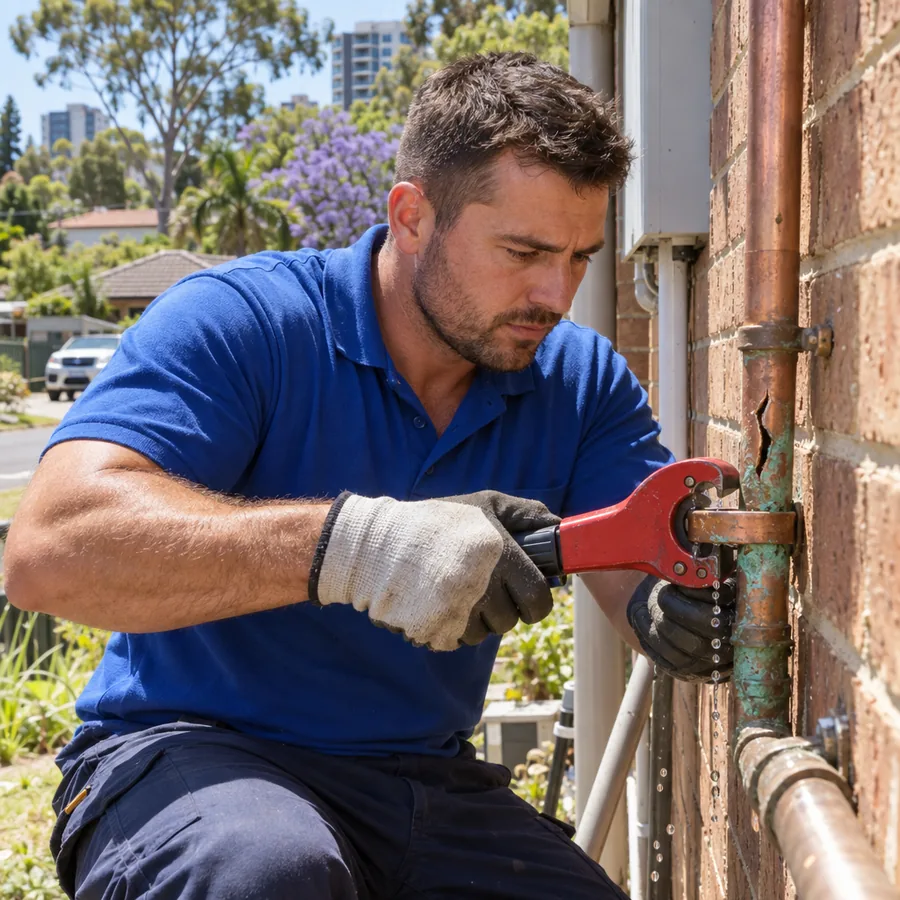
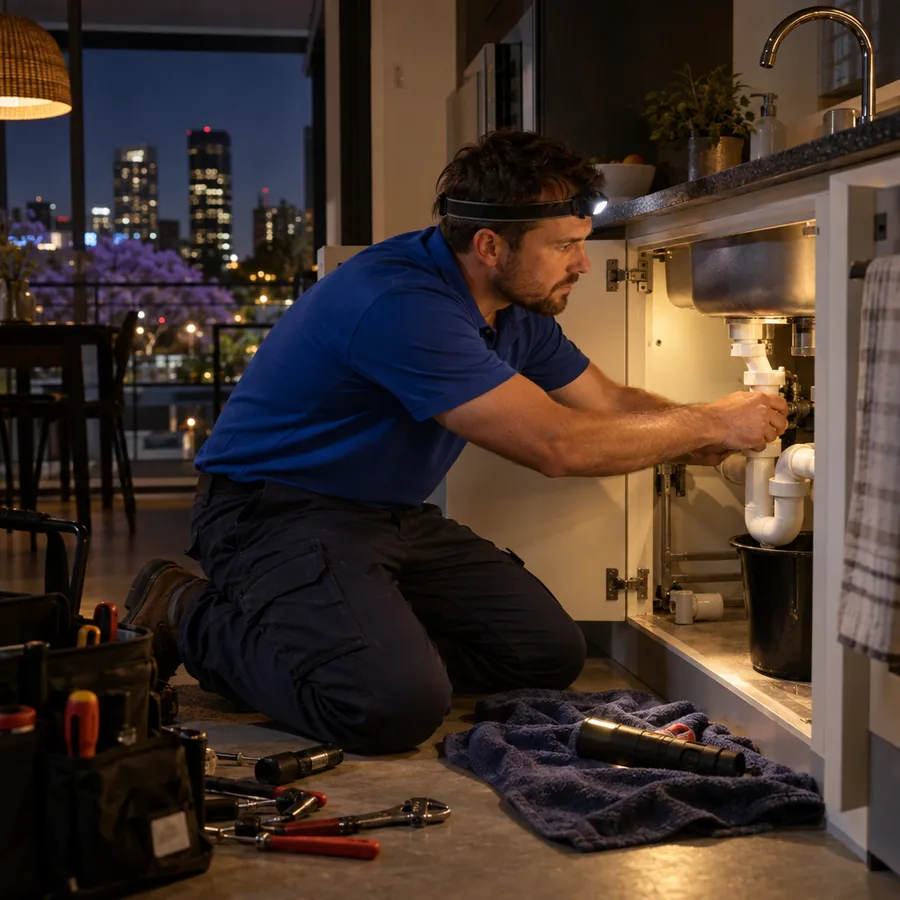
An emergency is a fault that is causing damage or a health risk right now. Water running from a burst pipe, a split flexi hose or a hot water tank that has let go and cannot be isolated. Sewage surfacing through a shower, a floor waste or the overflow relief gully in the yard. A gas smell inside the house or unit. No hot water in a household with a newborn, someone elderly or someone unwell. The only toilet in the home blocked. A tap or cistern that will not shut off and is flooding a bathroom in a unit block, where the water goes straight into the unit below.
A dripping tap, a slow basin, a toilet that runs for a few seconds after flushing or a hot water unit that is a bit lukewarm can wait for the morning, and you will be told that on the phone. The point of the call is to work out which one you have, because paying the after-hours rate for a fault that could have waited is not in anyone’s interest.
From Parramatta along the M4, M7 and M5
The plumber is based in Parramatta, which puts most of Western Sydney within a straightforward run at night. The M4 and the Great Western Highway reach Blacktown, Mount Druitt, St Marys and Penrith. Windsor Road and Old Windsor Road climb to Baulkham Hills, Castle Hill, Kellyville and Rouse Hill. The Cumberland Highway and the M7 drop south through Wetherill Park and Fairfield to Liverpool, Casula and the South West Growth Area around Austral and Leppington. Woodville Road and the Hume Highway reach Bankstown, Yagoona and Revesby, and the M5 continues to Ingleburn, Campbelltown and Camden.
That coverage runs across every housing era in the region. Federation homes in North Parramatta and Harris Park with galvanised water lines. Fibro and brick veneer from the 1950s to 70s in Guildford, Seven Hills, Doonside, Cabramatta and Bass Hill. The Housing Commission estates of Blackett, Emerton and Whalan with shared drainage in duplexes. Apartment towers around Parramatta Square, Church Street, the Westmead health precinct, Liverpool CBD and Bankstown Central, where a flexi hose failure at night becomes a problem for three floors at once. New estates in Schofields, Marsden Park, Oran Park and Gregory Hills with PEX pipework and pressure limiting valves.
Honest arrival times, not promises
You will not see a promise of a fixed number of minutes anywhere on this site. A trip from Parramatta to Merrylands at eleven on a Tuesday night and a trip to Campbelltown down the M5 in a Friday evening storm are not the same job, and a plumber who promises the same time for both is either padding one or going to break the other.
What you get instead is an honest arrival time on the phone based on where the plumber is when you call, how many jobs are ahead of you and what the roads are doing. If that changes, you get a call. On the busiest nights, a hailstorm across the Cumberland Plain or a heatwave, the wait can be longer, and you are told so at the start.
The after-hours rate is explained before anyone is dispatched
After-hours work costs more than a weekday booking. That is standard across the trade in NSW and covers a licensed tradie leaving home at night, on a weekend or on a public holiday. The difference here is when you find out. The after-hours rate is explained on the phone before anyone is dispatched, so you can decide whether the fault needs a plumber tonight or can be booked for the morning at the standard rate. Once the plumber is on site, the actual repair is quoted before work starts. There are no figures on this page because the rate belongs to the plumber who answers the phone, and you should hear it from them.
What to do while the plumber is on the way
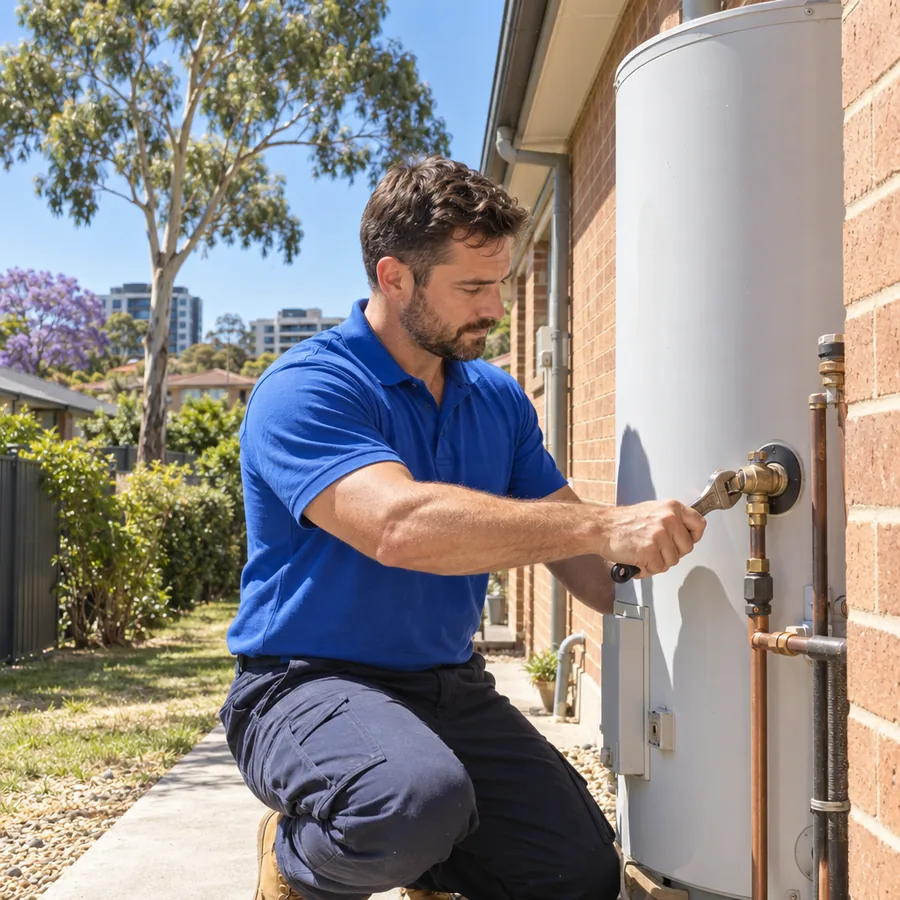
For running water, turn the stop tap off at the Sydney Water meter, usually in a box near the front boundary, or at the isolation valve under the sink, behind the toilet or in the riser cupboard if you are in a unit. Open the lowest tap in the house to drain the pressure. Switch off the hot water unit at the isolation switch or the gas tap. If water is near the switchboard or any power point, turn the power off at the main switch first and do not stand in water to do it.
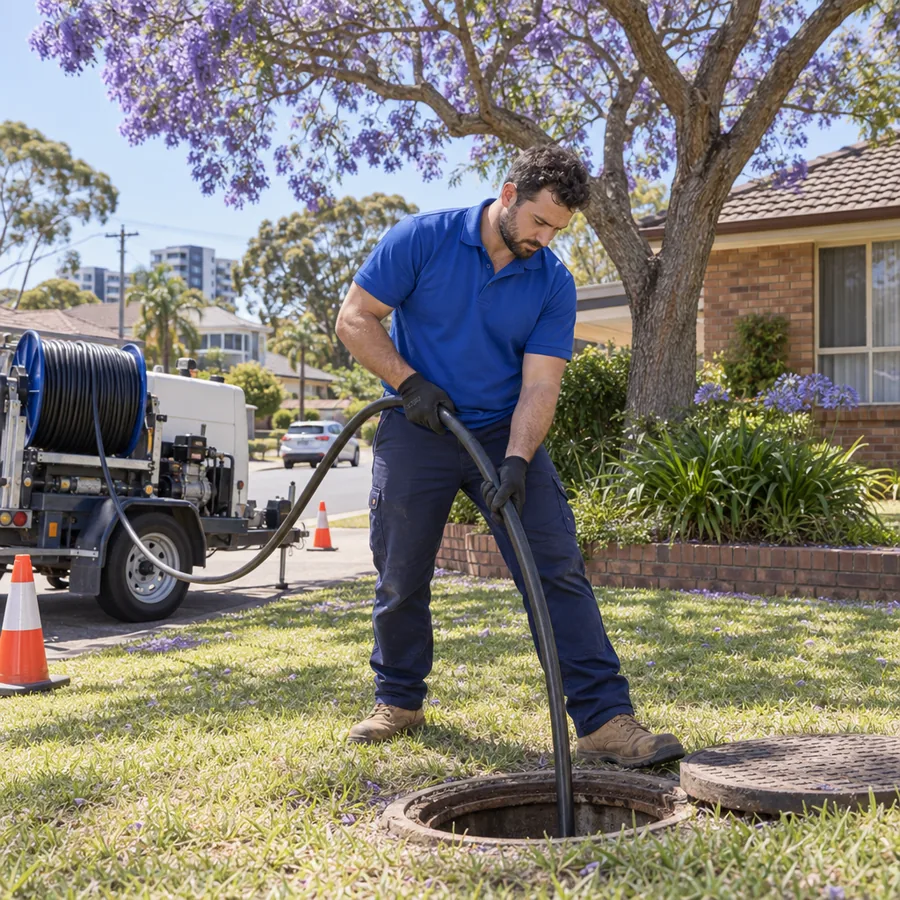
For a sewer backing up, stop using water in the house so nothing more goes down the line, keep children and pets away from anything that has surfaced, and leave chemicals out of it. For a gas smell, open windows and doors, do not operate switches or appliances, and if the smell is at the meter or in the street, report it to the Jemena gas leaks line before you call a plumber. The full step-by-step is in the guide to what to do when a pipe bursts.
Summer storms and heatwaves: the busiest nights in Western Sydney
Western Sydney runs hotter than the coast, and Penrith is regularly the hottest place in the Sydney basin. A run of days over forty puts every outdoor hot water unit and every sun-exposed PVC line under stress, and the failures come at night when the household finally showers. Summer afternoon storms then flood the stormwater, overload gutters and push the sewer back up through the overflow relief gully. On those nights a burst pipe, a blocked sewer and a dead hot water system all arrive at once from Parramatta to Penrith, and the plumber triages them by risk. A house with sewage coming up inside is seen before a house with a leaking outdoor tap, and you are told where you sit in the queue.
Licensed with NSW Fair Trading, at any hour
All plumbing, drainage and gasfitting work in NSW must be carried out by a tradesperson licensed with NSW Fair Trading under the Home Building Act 1989. That does not change because it is a Sunday. Ask for the licence number when you call and check it on the NSW Fair Trading public register online. Any gas or drainage work done on the night is covered by a certificate of compliance, which is what your insurer and, in a unit block, your strata manager will ask for when the water damage claim goes in.
What is included
- Genuine 24 hour call-out on nights, weekends and NSW public holidays, dispatched from a Parramatta base
- Burst and leaking pipes isolated and repaired, including turning the water off at the Sydney Water meter if you cannot
- Blocked sewers and overflowing relief gullies cleared with a jetter, with a camera inspection when the blockage keeps coming back
- No hot water diagnosed on the night, with a temporary fix or a same-day replacement organised
- Gas smells inside the property investigated and made safe by a licensed gasfitter
- Overflowing toilets, failed flexi hoses and taps that will not shut off made safe and repaired
- After-hours rate explained on the phone before anyone is dispatched, and the repair quoted before it starts
Signs you should call now
- Water is pouring from a pipe, ceiling or wall and you cannot stop it at a tap
- Sewage is coming up through a floor waste, shower or the overflow relief gully outside
- No hot water in a household with young children, elderly people or someone unwell
- You can smell gas inside the house or unit after the appliances are turned off
- The only toilet in the home is blocked or will not stop running
- A flexi hose has let go and water is running into the unit below
- The water meter is turning with every tap in the house closed
Gas smell or water near electricity
If you smell gas in the street or at the meter, move away from it and report it to the Jemena gas leaks line before calling a plumber. If water is running near a switchboard, power point or light fitting, turn the power off at the main switch before you go near it, and never stand in water to do so.
Frequently asked questions
What counts as a plumbing emergency after hours?
Anything that is causing damage or a health risk right now and cannot wait until the morning. That means a burst pipe or flexi hose you cannot isolate, sewage surfacing through a floor waste or the overflow relief gully, a gas smell inside the property, no hot water in a home with babies, elderly people or someone unwell, or a blocked toilet in a home with only one. A dripping tap, a slow basin or a cistern that runs for a few seconds is not an emergency, and you will be told so on the phone and offered a daytime booking at the standard rate instead.
How far does the 24 hour plumber travel?
The base is Parramatta, and after-hours work runs along the M4 to Blacktown, Mount Druitt and Penrith, up Windsor Road and Old Windsor Road into the Hills, down the Cumberland Highway and the M7 to Wetherill Park, Fairfield and Liverpool, along the Hume Highway to Bankstown, and down the M5 to Campbelltown and Camden. Growth-area suburbs such as Schofields, Austral, Leppington and Oran Park are covered too. Distance affects the arrival time you are given on the phone, and you are told that honestly rather than being promised the same time everywhere.
How quickly can someone get to me at night?
You will be told an honest arrival time on the phone based on where the plumber is when you call, how many jobs are ahead of you and what the roads are doing. A clear run along the M4 from Parramatta to Blacktown at midnight is very different from the Cumberland Highway in a Saturday storm. No fixed number of minutes is promised on this site because a promise like that is either padded or broken. What you get is a realistic time, a call if it changes, and advice on making the property safe in the meantime.
Is the after-hours rate higher, and when am I told?
Yes. Nights, weekends and public holidays carry a higher call-out rate than a weekday booking, which is standard across the trade and covers a tradie leaving home at two in the morning. The rate is explained on the phone before anyone is dispatched, so you can decide whether the job needs to happen now or can wait for the morning at the standard rate. Once the plumber is on site, the actual repair is quoted before any work starts. There are no figures on this page because the rate belongs to the plumber, not the website.
Should I turn the water off before the plumber arrives?
If water is running and you cannot stop it at the fixture, yes. Every Western Sydney home has a stop tap at the Sydney Water meter, usually near the front boundary, and most apartments have isolation valves under the sink or in the laundry, or a shut-off for the unit in a riser cupboard on the landing. Turn it clockwise until it stops, then open the lowest tap in the house to drain the pressure. You will be talked through it on the phone if you are not sure. Do not turn gas or electricity back on until told it is safe.
Do you work on public holidays and over Christmas?
Yes. Christmas Day, Boxing Day, New Year's Day, Australia Day, Easter, Anzac Day and the June and October long weekends are all covered, and they are some of the busiest days of the year because a full house puts more load on the hot water, the drains and the toilets than any normal weekday. The public holiday rate is explained on the phone before dispatch in the same way as any other after-hours call, and the plumber turns up with the parts to get most faults working again on the day.
Is the after-hours plumber licensed in NSW?
All plumbing, drainage and gasfitting work in NSW must be carried out by a tradesperson licensed with NSW Fair Trading under the Home Building Act 1989, and that applies at three in the morning exactly as it does at three in the afternoon. You are entitled to ask for the licence number when you call and to check it on the NSW Fair Trading public register online. A licensed plumber also issues a certificate of compliance for gas and drainage work, which matters for insurance claims after a flood or a strata dispute in a unit block.