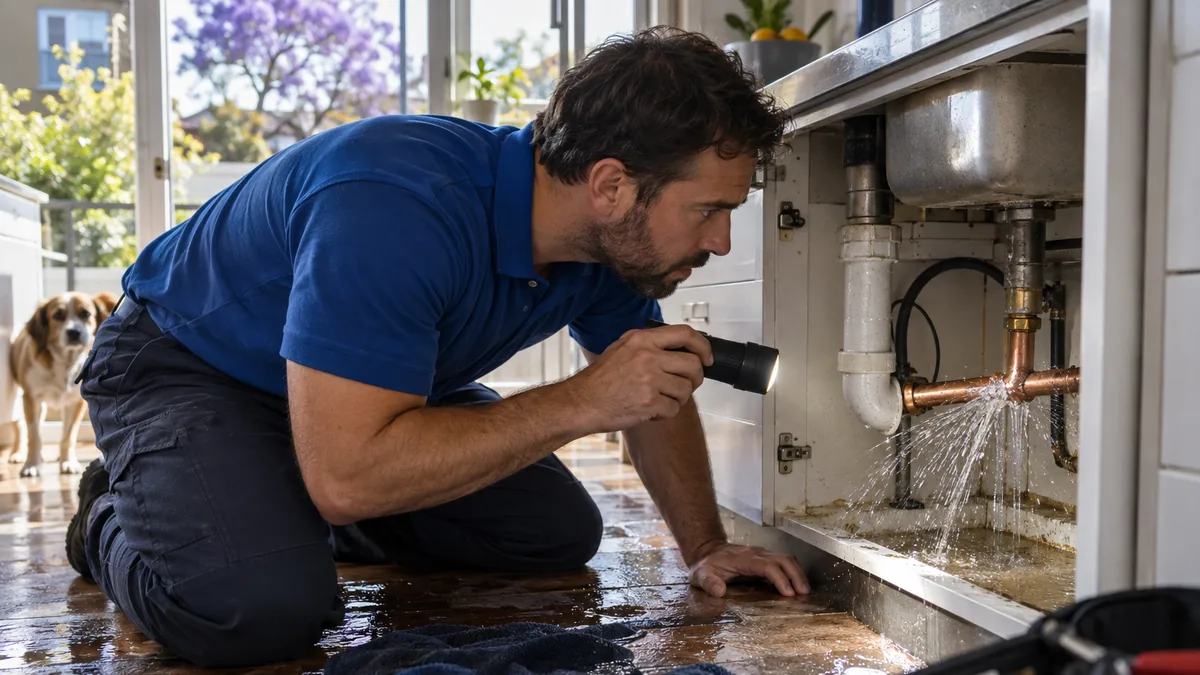
Every plumber in Western Sydney clears the same drain over and over: a sewer line in a 1950s to 1970s house, laid in earthenware, sitting in reactive clay, with a big tree on the nature strip. The wipes and grease that finally stop the flow get the blame, but they only snag because something upstream cracked first. This post explains why drains block here, what a summer storm does to a sewer, where Sydney Water’s responsibility ends and yours starts, and what the fix actually involves.
Cumberland Plain clay moves the pipes
Most of Western Sydney sits on the Cumberland Plain, a shale-derived clay that runs under Blacktown, Mount Druitt, Fairfield, Liverpool, Penrith, Campbelltown and Camden. It is reactive: it swells when wet and shrinks when dry. A long dry spell opens cracks in a lawn you can put your hand into, and the next wet season closes them. A rigid pipe buried in that ground is lifted, dropped and pushed sideways a little every year. Joints pull apart, sections sag and hold water, and the end of one pipe rides up over the socket of the next.
The Hills, Winston Hills and parts of North Parramatta sit on Hawkesbury sandstone ridges with shallower soils. Sewers move less there, but the blocks are steep and stormwater runs are long, so those suburbs see more stormwater trouble than sewer trouble.
Earthenware sewers laid before the 1980s
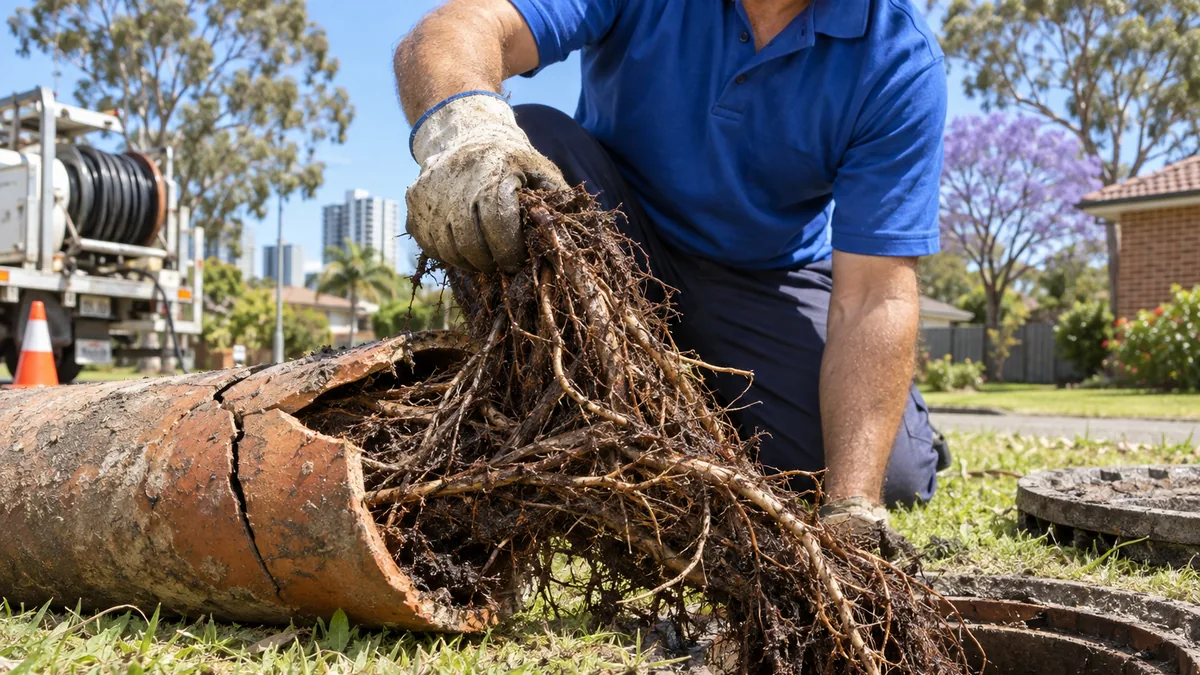
Until roughly the 1980s, house sewers across Sydney were laid in short lengths of glazed earthenware pipe, joined with cement mortar or rubber rings. The pipe itself lasts a very long time; the joints do not. Every short length there is a joint, and every joint is a place where clay movement can open a gap. Once a gap exists, water leaks out into the soil around it and tree roots follow the moisture in.
From the 1980s on, PVC took over. It is jointed with solvent cement, flexes a little with the ground and gives roots far fewer entry points. That is why a new house in Schofields or Oran Park rarely has a root problem and a 1960s house in Doonside often does.
The trees that find the cracks
Roots do not break sound pipes; they enter cracked ones and grow. The usual suspects across Western Sydney:
- Camphor laurels in older Parramatta, Bankstown and Liverpool streets.
- Liquidambars, planted widely in the 1960s and 70s and now very large.
- Moreton Bay and Port Jackson figs around old Parramatta and along the river.
- Jacarandas and the big street plane trees in the established suburbs.
- Paperbarks and willows along South Creek, Prospect Creek and the Georges River.
- Eucalypts on larger blocks in the Hills, Penrith and Macarthur.
A root that enters at a joint grows into a mat that fills the pipe. Paper, wipes and grease snag on the mat and the drain blocks. Cutting the roots clears the drain; it does not close the joint, so they grow back.
Summer storms and the overflow relief gully
Western Sydney’s summer afternoon thunderstorms drop a great deal of water in a short time. Stormwater that should run to the street finds its way into the sewer through cracked joints, wrongly connected downpipes and open gully grates, and the sewer main surcharges. The overflow relief gully, the open grated drain in the garden outside the laundry or bathroom, is designed to be the lowest point in your private sewer so that surcharge comes out there rather than through the floor waste in the bathroom or the shower. If it is buried under a garden bed, paved over or higher than the internal floor wastes, the sewage comes up inside instead. Keep it clear and visible, and if the grate sits loosely that is by design.
Where Sydney Water’s responsibility ends
Sydney Water owns the sewer main in the street or the rear easement and the connection point where your private line joins it, usually at or near the property boundary. Everything from that point to the house is the owner’s: the private sewer, the inspection openings, the overflow relief gully and all the internal drainage. If a blockage is in the main, or the main is surcharging, that is Sydney Water’s job. If it is in your line, it is yours and it is what a plumber clears. The plumber can tell which side of the boundary the blockage sits on, and if the fault is Sydney Water’s will say so rather than charge you to clear the wrong pipe.
Jetting, CCTV and relining
- Clearing. A high-pressure water jetter or an electric drain machine cuts through roots and flushes the line. Most first-time blockages are cleared on the visit.
- CCTV inspection. If the drain has blocked before, or the jetter meets solid resistance, a camera goes down the line to find the cause, how deep it is and how far from the inspection opening. The recording shows whether you have roots at one joint, a displaced joint, a sag or a collapsed section.
- Relining. Where the pipe is cracked but still round, a resin liner is inverted or pulled into the line and cured in place, sealing the joints from the inside without digging. Roots cannot re-enter a relined section.
- Excavation and replacement. Where the pipe has collapsed, or a sag holds water, that section is dug up and replaced in PVC.
Clearing the same drain every few months without a camera is money spent on the symptom. The blocked drains page sets out how the plumber works through those steps and quotes each one before it starts.
What not to put down the drain
- Wipes of any kind, including those labelled flushable.
- Cooking oil and fat, which set in the pipe and are the main cause of blockages in unit blocks and shops.
- Coffee grounds, rice and flour, which settle in sags.
- Sanitary products, cotton buds, dental floss and hair.
- Paint, plaster and grout washed down the laundry tub.
- Anything at all into the overflow relief gully.
Suburbs by era: what the plumber expects to find
- Mount Druitt estates. The 1960s and 70s Housing Commission suburbs of Blackett, Emerton, Whalan, Tregear, Lethbridge Park, Bidwill, Shalvey, Hebersham and Dharruk have original earthenware sewers and shared drainage through duplexes and townhouse rows. A blockage in a shared line can affect more than one home, and who pays needs sorting before the digging starts.
- Blacktown, Seven Hills and Doonside fibro. 1950s to 70s homes on clay with big liquidambars and camphor laurels: cracked joints and roots, plus decades of later extensions tied into old lines.
- Bankstown, Yagoona and Revesby. 1950s and 60s homes, mature street trees, earthenware sewers, now often with a granny flat or duplex added to the same private line.
- Penrith, Kingswood and St Marys. Hot, dry summers crack the clay hardest here, and St Marys has 1950s fibro from the munitions-worker era with pipework to match.
- Liverpool, Fairfield and Cabramatta. Older fibro and brick on heavy clay, with a lot of cooking grease from homes and small shops.
- Campbelltown, Minto, Airds and Claymore. 1970s and 80s Housing Commission areas, some in early PVC and some still earthenware, with shared drains in the townhouse clusters.
- Schofields, Oran Park, Austral and the new estates. PVC lines and few roots, but small lots and townhouse developments with shared private drains. A blockage downstream of your neighbour is your problem too, and builders’ rubble, grout and rendering waste in the line are the usual cause in the first years.
If your home is in Blacktown, Mount Druitt or Bankstown, the area page lists what usually goes wrong with the drains there. Whatever the era, the honest sequence is the same: clear it, look at it, fix the cause once.
Questions on this topic
Why do drains in Western Sydney block so often?
Three things working together. Most of the region sits on reactive Cumberland Plain clay that swells when wet and shrinks when dry, so buried pipes move. Homes built before the 1980s have earthenware sewers with a joint every short length, and clay movement opens those joints. Camphor laurels, liquidambars, figs and jacarandas then send roots through the gaps. Wipes and grease snag on the roots and the drain stops.
What is the overflow relief gully and why does it matter?
It is the open grated drain in the garden outside the laundry or bathroom, set as the lowest point in your private sewer. When the sewer surcharges in a summer storm, sewage comes out there rather than through the shower or a floor waste inside. If it has been paved over, buried under mulch or raised above the internal floor wastes, the overflow comes up inside the house instead. Keep it clear and visible.
Who is responsible for a blocked sewer, Sydney Water or me?
Sydney Water owns the sewer main and the connection point where your private line joins it, usually at or near the property boundary. Everything from that point to the house is the owner's, including the overflow relief gully and the inspection openings. If the blockage or the surcharge is in the main, Sydney Water fixes it. If it is in your line, a licensed plumber clears it and the plumber will tell you which it is.
Is a CCTV drain inspection worth paying for?
If the drain has blocked before, yes. Clearing removes the roots or the grease; it does not close the joint they came through, so the same drain blocks again. A camera shows whether you have roots at one joint, a displaced joint, a sag that holds water or a collapsed section, and how deep it sits. That decides whether relining or a short excavation fixes it for good, and the quote for each is given before any work starts.
Can a cracked earthenware sewer be fixed without digging?
Often. If the pipe is cracked or root-affected but still round, a resin liner is inverted or pulled into the line and cured in place, sealing every joint from the inside. Roots cannot re-enter a relined section. Where a section has collapsed or sagged so it holds water, relining will not work and that length is excavated and replaced in PVC. The camera inspection tells the plumber which you need.
Do new estates in Schofields or Oran Park get blocked drains?
Less often from roots, because the lines are PVC. The usual causes in the first years are builders' rubble, grout and rendering waste washed into the line, and shared private drains in townhouse developments where a blockage downstream of a neighbour backs up into your home. Sorting out who pays for a shared drain is worth doing before anyone digs, and the plumber can help with that.
- blocked drains
- tree roots
- Cumberland Plain clay
- earthenware sewer
- overflow relief gully
- CCTV inspection