A burst pipe under mains pressure does its damage in the minutes before someone stops the water. In Parramatta that usually means water through the ceiling of the apartment below in a Church Street tower, across the timber floor of a Federation home in North Parramatta, or down the stairwell of a 1960s walk-up block in Harris Park. The plumber is on the way and you have been told an honest arrival time on the phone. What you do in the next fifteen minutes decides how much of the home is wet when they arrive. Work through the steps in order.
1. Turn the water off at the Sydney Water meter
In a house, the meter belongs to Sydney Water and sits at the front boundary, normally in a plastic or concrete box in the ground near the driveway or the front fence, sometimes on a short riser beside the fence. Lift the lid. There is a tap or a lever on the house side of the meter. Turn the tap clockwise until it stops, or swing the lever a quarter turn, and the whole property is isolated. Everything on the house side of the meter is yours, so the repair is yours to arrange, but stopping the flow costs nothing and takes seconds.
If the tap will not move, do not force it and snap the spindle; tell the plumber it is seized.
2. Find the isolation valve in a unit or apartment
In the apartment towers around Parramatta Square, the Westmead health precinct and Wentworthville there is no meter you can reach. Look for the unit isolation valve instead. The usual spots are under the kitchen sink, in the laundry cupboard, behind an access panel in the bathroom or, in newer buildings, in a services cupboard in the corridor with a valve labelled for each unit. If you cannot find it within a minute, ring the building manager or the strata contact, who can isolate the riser for your floor.
The 1960s and 70s red-brick walk-up blocks in Harris Park, Granville, Auburn and Merrylands are different. Water often comes up a shared riser with a valve per unit in the laundry, the bathroom or an external services duct, and the valves are rarely labelled and sometimes seized. Turn off the one you think is yours and check a tap inside. If your valve is seized, the whole riser may need to go off, which means warning the neighbours.
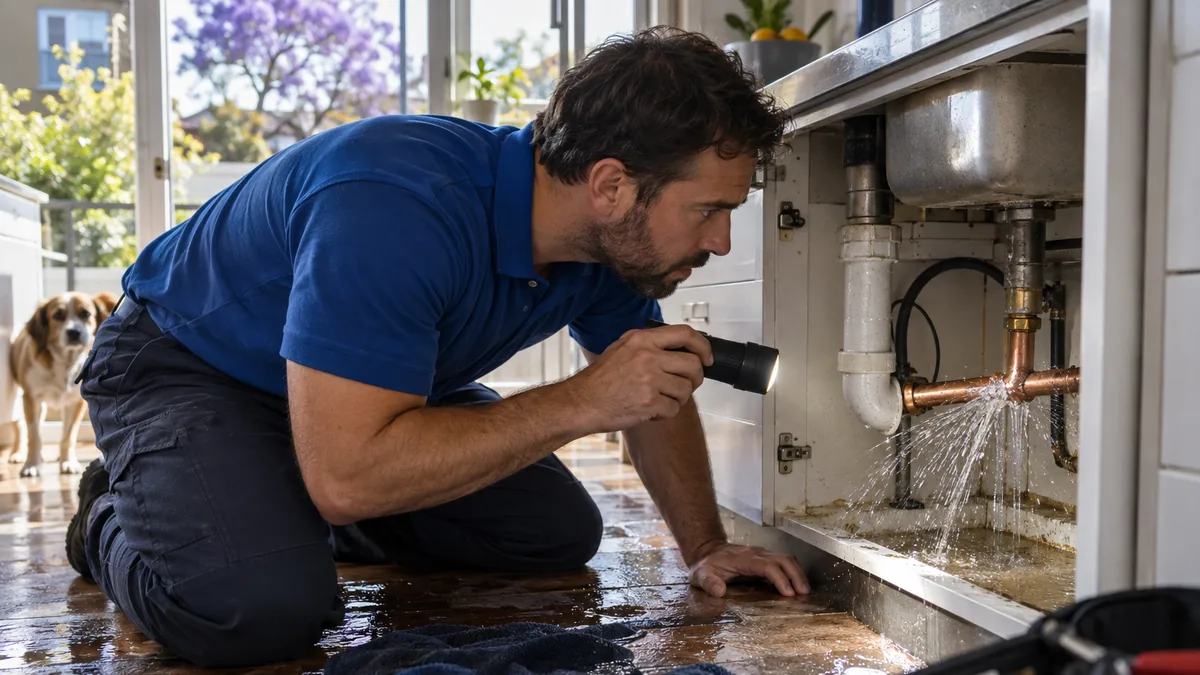
If the water is coming from one fixture only, such as a flexible hose under the vanity or the cistern connection behind the toilet, the small mini-stop tap at that fixture stops it on its own and the rest of the unit stays on.
3. Open a tap to drain the pressure
Once the meter or the valve is closed, open the lowest tap in the home, or a garden tap, and leave it running. The pipework still holds water under pressure and the burst will keep spraying until that pressure is gone. Opening a tap lets it drain somewhere harmless and the flow at the split soon drops to a dribble. Leave it open until the plumber arrives.
4. Make the power safe
If water is coming through a light fitting, running down a wall with power points, or pooling near an appliance or the switchboard, switch the electricity off at the main switch before you touch anything in that room. If the water is nowhere near electricity, leave the power on so you have light and fans once the water is stopped.
5. Protect floors, ceilings and the unit below
Move rugs, furniture, cables and anything electrical out of the wet area or up on blocks. Lift the edge of carpet so the underlay can start to drain. Put a bucket under any drip from a ceiling and stay out from under a ceiling that is sagging with water; a small hole at the lowest point releases it into the bucket rather than all at once. Rolled towels across doorways slow the spread to the next room.
In an apartment or an upstairs unit, assume the water has already reached the floor below. Knock on the neighbour’s door or ring the building manager so they can move their belongings and photograph their side. Strata insurers will ask whether the failed part was inside your lot or in common property, and photographs from both units settle that quickly.
6. Call the plumber with the right details
Tell them your suburb and street, whether the water is off, where the water is coming from, whether it is clean water or waste, whether it has reached a neighbour, whether the pipe is visible or inside a wall or slab, and how they will get in, including gate codes, lift access and the building manager’s name. That lets the plumber explain the rate before anyone is dispatched, bring the right fittings, and speak to the building manager before arriving rather than after. The burst pipe repair page describes what happens on arrival: isolate, locate, quote, repair, test.
7. Photograph everything and keep the failed part
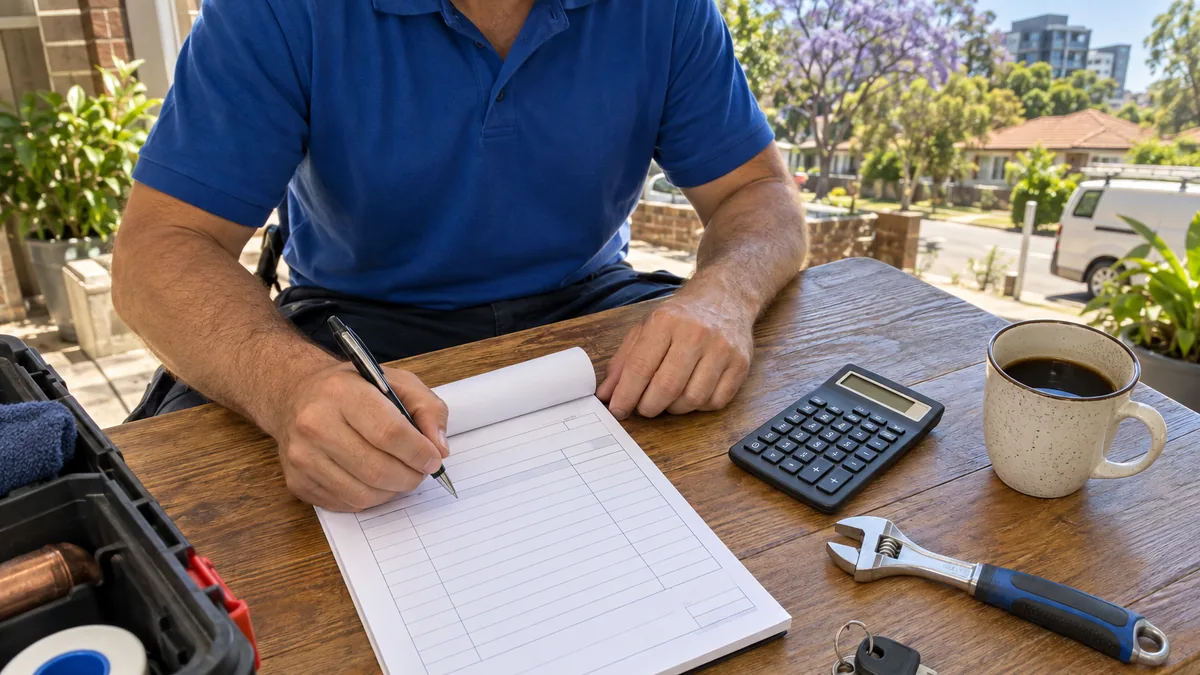
Before anyone starts mopping, photograph the source, the water on the floor, the damage to walls and ceilings, and anything ruined. Photograph the meter reading as well. When the plumber cuts out the split pipe or replaces the burst hose, ask to keep the old part. Most home and contents policies cover sudden, accidental water damage but not the worn part itself, and not damage from a slow leak that was ignored. The plumber’s written report stating the cause, the location and the repair is what the claim rests on.
8. Start drying straight away
Open windows, run fans and a dehumidifier if you have one, and pull up wet carpet and underlay. Western Sydney heat helps, a humid week after a storm does not, and a closed unit with wet plasterboard grows mould behind the skirting within days. If the damage is large, tell the insurer now and ask about a restoration company; many policies include drying and make-safe.
Why pipes burst around Parramatta
It is not frost. Parramatta rarely sees a frosty morning and a pipe splitting from ice is close to unheard of here. The causes are older and slower.
- Pinhole corrosion in copper. Sydney’s water is known for pitting copper from the inside, and the copper in 1960s to 1980s homes and unit blocks in Westmead, Wentworthville, Toongabbie and Guildford is now at the age where it lets go. The first sign is often a green stain, a damp patch or a water bill that has jumped. Leak detection finds the pinhole before it becomes a burst.
- Galvanised steel in Federation homes. Original water lines in the 1900s to 1930s houses of North Parramatta, Harris Park and the streets around Parramatta Park rust from the inside until they let go at a thread or a bend, usually after years of falling pressure.
- Flexible hoses. The braided hoses under sinks, vanities and toilets fail without warning and are behind a large share of apartment floods in Parramatta, Westmead and Wentworthville towers. Replace them on a schedule, not after the flood.
- High mains pressure. Suburbs low in the network near Prospect Reservoir, including Guildford, Smithfield and Wetherill Park, and streets along the Parramatta River can see mains pressure well above what old fittings were built for. A pressure limiting valve at the meter protects everything downstream.
- Clay movement. Much of Cumberland sits on reactive Cumberland Plain clay that swells in a wet year and shrinks in a dry one. Buried lines and pipework under slabs crack where the ground moves.
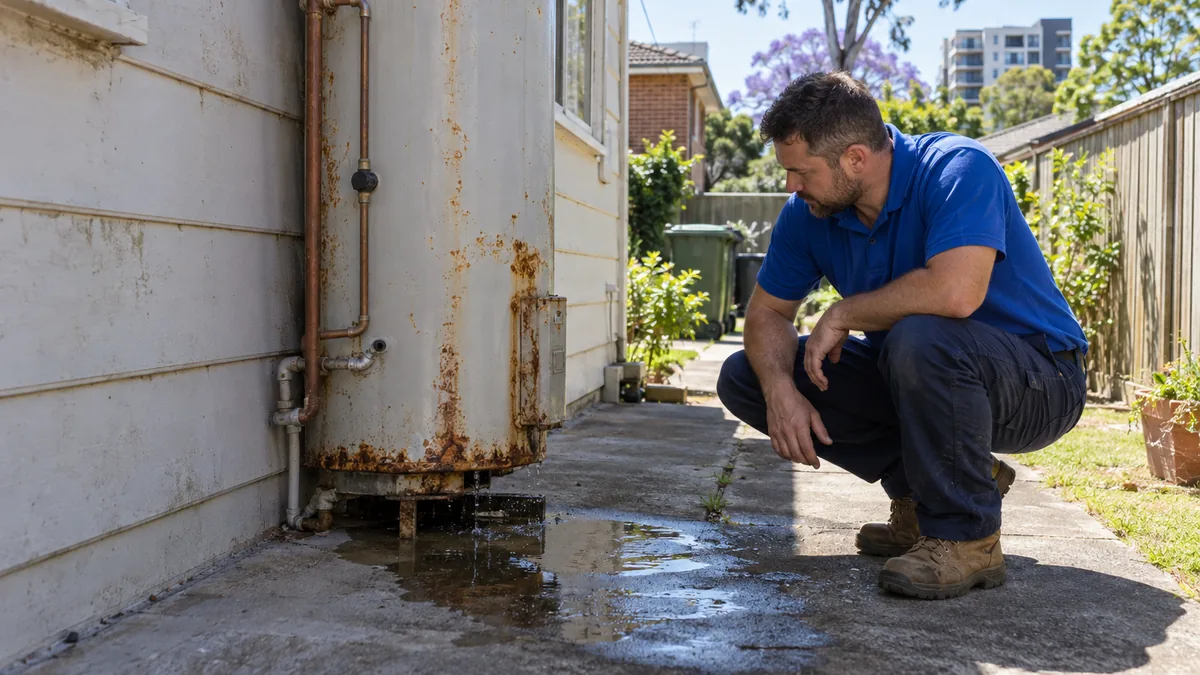
- Heat. PVC and poly pipe on a sun-exposed western wall, and the pipework on an outdoor hot water unit, expand and contract through every hot summer day and cool night. Joints work loose and cracks open in summer, not winter.
The prevention is not glamorous: replace flexible hoses on a schedule, fit a pressure limiting valve if the pressure is high, and have old galvanised or copper lines looked at before they decide the timing for you. If you are in Parramatta or Harris Park, the suburb pages list what usually fails in each type of building there.
Questions on this topic
Where is the water meter on a house in Parramatta?
At the front boundary, usually in a plastic or concrete box in the ground near the driveway or front fence, sometimes on a short riser beside the fence. Sydney Water owns the meter; the tap or lever on the house side of it is what you turn to isolate the property. Turn the tap clockwise until it stops or swing the lever a quarter turn. Find it on a quiet afternoon, not with a torch at midnight.
How do I turn the water off in a Parramatta apartment?
Look for the unit isolation valve: under the kitchen sink, in the laundry cupboard, behind a bathroom access panel or in a services cupboard in the corridor with a valve labelled for each unit. In a 1960s walk-up in Harris Park or Granville the valve is often on a shared riser and unlabelled. If you cannot find it within a minute, ring the building manager, who can isolate the riser for your floor.
Should I turn the electricity off after a burst pipe?
Only if water is near it. Water coming through a light fitting, running down a wall with power points, or pooling near an appliance or the switchboard means you switch off at the main switch before touching anything in that room. If the water is well away from electricity, leave the power on so you have light and fans running once the water is stopped.
What should I tell the plumber on the phone?
Your suburb and street, whether the water is off, where it is coming from, whether it is clean water or waste, whether it has reached a neighbour or the unit below, whether the pipe is visible or inside a wall or slab, and how to get in, including lift access and the building manager's contact. With that the plumber gives you an honest arrival time, explains the rate before dispatch and brings the right fittings.
Will home insurance cover a burst pipe in Western Sydney?
Most home and contents policies cover sudden, accidental water damage from a burst pipe or flexible hose, including carpet, flooring and plasterboard. They generally do not cover the worn pipe or hose itself, or damage from a slow leak that was ignored. Photograph everything before cleaning up, keep the failed part, and ask the plumber for a written report stating the cause, the location and the repair.
Do pipes in Parramatta burst because of frost?
Almost never. Parramatta rarely sees a frosty morning and a pipe splitting from ice is close to unheard of here. Pipes burst because of pinhole corrosion in ageing copper, rusted galvanised lines in Federation homes, failed flexible hoses, high mains pressure in the suburbs near Prospect, reactive clay moving buried pipework, and summer heat working joints loose on sun-exposed walls.
- burst pipe
- Sydney Water meter
- flexi hose
- apartments
- insurance
- copper pipes