No hot water is the emergency that feels worst in the morning and is most often something you can check yourself in five minutes. Before you ring, run through this list. A large share of the calls a plumber gets about a dead hot water system in Western Sydney end with a tripped breaker, an off-peak tariff that has not switched on yet, or a gas unit whose ignition locked out after a storm. The rest are real faults, and this list tells you which one you have so you can describe it accurately and be given an honest arrival time and rate on the phone.
1. Electric storage: check the power first
Electric storage tanks are the standard hot water system in 1950s to 80s homes across Blacktown, Penrith, Liverpool and Bankstown, usually outside on a concrete pad, in the laundry or in a cupboard.
- Circuit breaker. Open the switchboard and look for a tripped breaker or a fuse labelled hot water, HWS or water heater. Reset it once. If it trips again, leave it off; a heating element that has failed to earth trips the breaker every time and needs replacing.
- Off-peak timing. Many tanks in Western Sydney run on a controlled load or off-peak tariff, which means the network only powers the element for set hours, mostly overnight. If the household used more hot water than usual, or the tank was drained, there may simply be no reheat until the next off-peak window. A tank that is fine in the morning and cold by dinner is often a tariff question, not a fault.
- Isolation switch. Some units have a switch on the wall near the tank. Check nobody has turned it off.
2. Gas storage and continuous flow: supply and ignition
Reticulated gas from the Jemena network is widespread across Western Sydney, and gas storage and continuous-flow units are common in 1980s to 2010s homes and in apartments.
- Is gas reaching the house? Try the cooktop if you have one. If nothing lights anywhere, check the gas meter for a closed valve and ask a neighbour. A supply problem in the street is for the Jemena gas leaks line, not a plumber. If you smell gas at the meter or outside, report it to Jemena first.
- Pilot light. Older gas storage units have a standing pilot that blows out in a storm or a strong westerly. The relighting instructions are on the panel of the unit. Follow them exactly and give the thermocouple time to warm. If it will not stay lit, the thermocouple or the gas valve has failed.
- Continuous-flow error codes. Wall-mounted continuous-flow units show a code on the controller or a blinking light when they lock out. Codes differ by maker, so read the code off the controller and quote it on the phone. Common causes are a power interruption during use, a blocked inlet filter, low flow, a failed igniter or a flue fault. Turn the unit off at the power point, wait a minute and turn it back on once. If it locks out again, stop and describe the code.
Gas work inside the property, including the gas valve, burner and flue on a hot water unit, must be done by a gasfitter licensed with NSW Fair Trading.
3. Relief valve dripping
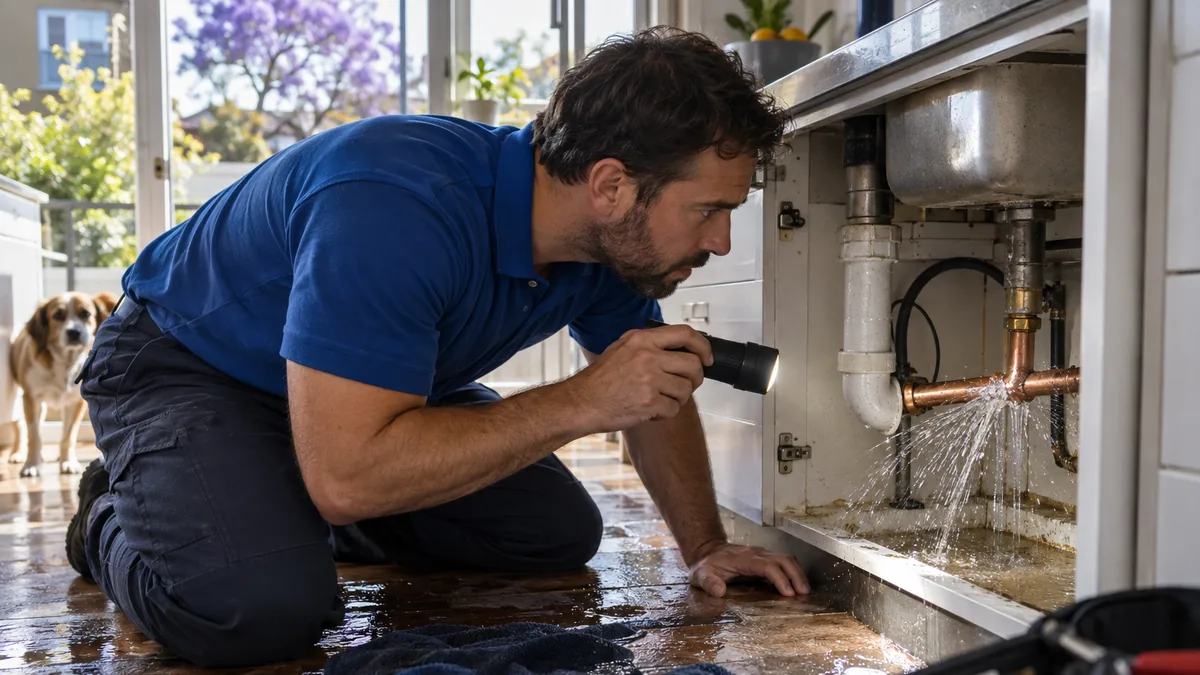
Every storage tank has a temperature and pressure relief valve on the top or side, with a small copper line to a drain. A slow drip while the tank is heating is normal; it is how the tank releases expansion. A steady run of water, or a valve that never stops, means the valve has failed or the mains pressure is too high. In the suburbs low in the network near Prospect, including Guildford, Fairfield and Wetherill Park, high mains pressure wears relief valves out quickly, and a pressure limiting valve at the inlet fixes the cause rather than the symptom. Lift the valve’s lever briefly once a year to test it; if it does not reseat, replace it.
4. Tempering valve
Hot water to bathrooms in NSW is delivered through a tempering valve that mixes it down to a safe temperature. When the valve fails, the water at the shower is lukewarm even though the tank is hot, or it swings between hot and cold. If the kitchen tap, which is often not tempered, runs hot and the shower does not, the tempering valve is the suspect, not the tank. It is a replaceable part.
5. Tank age and what a leak means
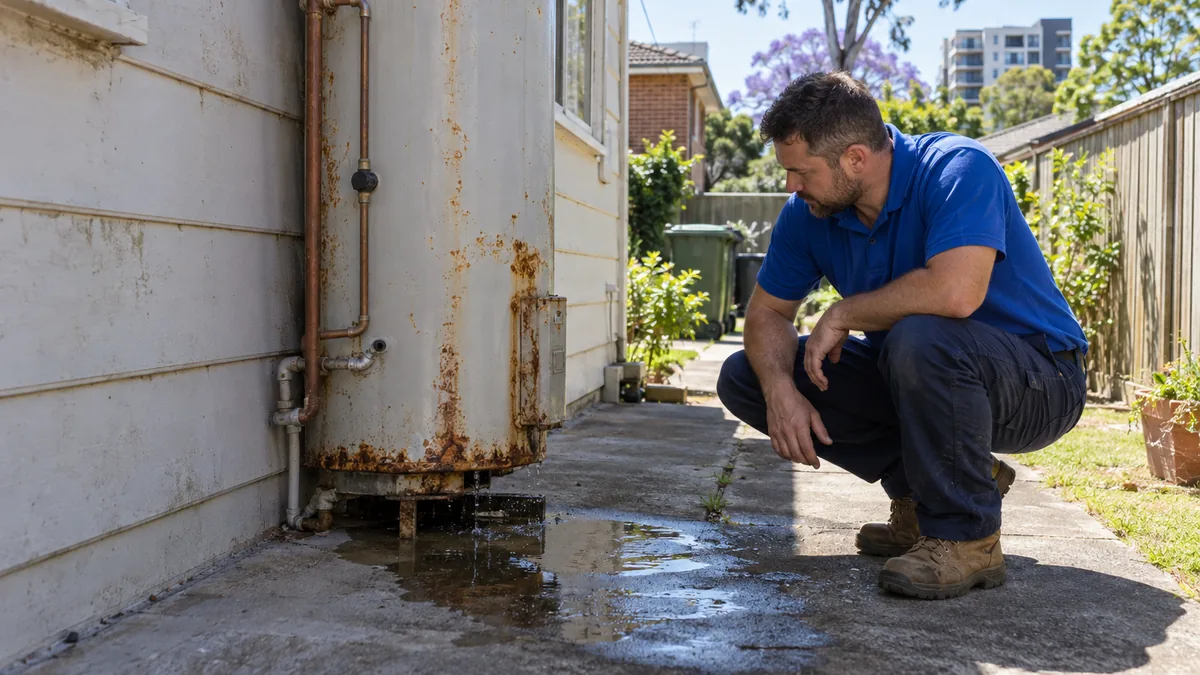
Look for the compliance plate on the tank. It shows the date of manufacture. Western Sydney heat is hard on outdoor tanks, and a unit on a sun-facing western wall in Penrith or Campbelltown ages faster than one in a Hills laundry. Once a tank is past the age its maker warrants, every repair becomes a decision about whether to keep spending on it.
Water pooling under the tank, rust streaks down the case or water at a seam is the cylinder itself corroding through. A leaking cylinder cannot be repaired. It is a replacement, and it is worth turning the water off at the tank’s isolation tap and the power off at the breaker until it is done, because a cylinder that has started to leak can let go completely. Elements, thermostats, relief valves, tempering valves and thermocouples, by contrast, are all replaceable parts.
6. Heat pumps and NSW rebates
Heat pump hot water systems have become common in Western Sydney because they use far less electricity than a resistive tank and because NSW energy-saving schemes offer incentives towards replacing an electric storage tank with one. The incentives change and are applied through accredited installers, so ask the plumber what is available when you replace rather than relying on something you read last year. A heat pump needs air around the outdoor unit, a drain for condensate, and a spot where its fan will not sit under a neighbour’s bedroom window. On a hot Western Sydney summer day it works well; on a cold Camden morning it runs longer, which is normal.
7. Heat and outdoor units
Penrith regularly records the hottest temperatures in the Sydney basin, and Blacktown, Liverpool and Campbelltown are not far behind. An outdoor unit on a western wall takes direct afternoon sun for hours. That stresses the electronics on continuous-flow units, cracks plastic fittings, hardens the seals on relief valves and shortens the life of every part. A simple shade over the unit, without blocking its flue or air intake, is worth doing. After a summer storm, check the unit for water in the electrics and hail damage to the casing before switching it back on.
When to ring
Ring straight away if the tank is leaking, if you smell gas, if the relief valve is running continuously, or if a breaker trips repeatedly. Ring for a daytime booking if the water is lukewarm, the pilot keeps going out, or the tank is past its age and you want a quote for repair against replacement before it fails in the middle of winter. The hot water repairs page covers what the plumber does on site, and the gas plumber page covers gas units and compliance certificates. Whether you are in Blacktown or Parramatta, you will be told the rate before anyone is dispatched and given a quote for repair or replacement before work starts.
Questions on this topic
Why is my hot water fine in the morning and cold by the evening?
Most likely the tank is on a controlled load or off-peak tariff, which means the network only powers the element for set hours, mostly overnight. Once the tank is used up there is no reheat until the next window. That is a tariff question, not a fault. If the household has grown, ask about a larger tank, a continuous-flow unit or a heat pump when the tank is next replaced.
My gas hot water pilot light keeps going out. What is wrong?
Older gas storage units have a standing pilot that a storm or a strong westerly can blow out. Relight it following the instructions on the unit's panel and give the thermocouple time to warm. If it will not stay lit after that, the thermocouple or the gas valve has failed and needs a licensed gasfitter. If you smell gas at the meter or outside the house, report it to the Jemena gas leaks line first.
Is a dripping relief valve on a hot water tank normal?
A slow drip while the tank is heating is normal; it is how the tank releases expansion. A steady run of water, or a valve that never stops, means the valve has failed or the mains pressure is too high. In the suburbs near Prospect where pressure runs high, a pressure limiting valve at the inlet fixes the cause. Lift the lever briefly once a year to test the valve, and replace it if it does not reseat.
Can a leaking hot water cylinder be repaired?
No. Water pooling under the tank, rust streaks down the case or water at a seam means the cylinder has corroded through, and a cylinder that has started to leak can let go completely. Turn the water off at the tank's isolation tap and the power off at the breaker, and plan for replacement. Elements, thermostats, relief valves, tempering valves and thermocouples are all replaceable; the cylinder itself is not.
Are heat pump hot water systems worth it in Western Sydney?
For most homes replacing an electric storage tank, yes. A heat pump uses far less electricity than a resistive element, and NSW energy-saving schemes offer incentives through accredited installers towards the swap. The incentives change, so ask the plumber what applies at the time. The unit needs air around it, a condensate drain and a spot where the fan will not sit under a neighbour's bedroom window.
Does Western Sydney heat damage hot water units?
Yes. An outdoor unit on a western wall in Penrith, Blacktown or Campbelltown takes direct afternoon sun for hours, which stresses the electronics on continuous-flow units, cracks plastic fittings and hardens the seals on relief valves. A simple shade that does not block the flue or air intake helps. After a summer storm, check the unit for water in the electrics and hail damage before switching it back on.
- hot water system
- off-peak
- gas hot water
- relief valve
- tempering valve
- heat pump